The Ten Books (Mandalas)

Mandala 1
Hymns: 191
Rishi: Madhucchandas, Medhatithi, Kanva, and 10 others
A miscellaneous collection, generally considered one of the later additions. It contains hymns by multiple seers, primarily addressed to Agni and Indra.
Mandala 2
Hymns: 43
Rishi: Gritsamada Saunahotra
The shortest of the Family Books, attributed mostly to the family of the seer Gritsamada. The majority of the hymns are dedicated to the two principal deities, Agni (Fire) and Indra (Warrior/Storm God).
Mandala 3
Hymns: 62
Rishi: Vishvamitra Gathina
Attributed to the family of the seer Vishvamitra. This Mandala is highly significant as it contains the most revered verse in Hinduism, the Gayatri Mantra (RV 3.62.10), addressed to the solar deity Savitr.
Mandala 4
Hymns: 58
Rishi: Vamadeva Gautama
Attributed to the family of the seer Vamadeva. The hymns maintain the focus on Indra and Agni, but also include notable praise for the Rbhus (craftsmen deities) and the nature deities Usas (Dawn) and Vayu (Wind).
Mandala 5
Hymns: 87
Rishi: Atri Bhauma
Attributed to the family of the seer Atri. The hymns are primarily addressed to Agni, Indra, the Visvedevas ('all gods'), the Maruts (storm gods), and the twin-deity Mitra-Varuna.
Mandala 6
Hymns: 75
Rishi: Bharadvaja Barhaspatya
Attributed to the family of the seer Bharadvaja. This collection continues to feature numerous hymns to Agni and Indra, and is considered one of the oldest and most homogeneous sections of the Rigveda.
Mandala 7
Hymns: 104
Rishi: Vasishtha Maitravaruni
Attributed to the family of the seer Vashishtha. Hymns cover Agni, Indra, the Visvedevas, and the Maruts. It also includes important hymns dedicated to Varuna and the river/goddess Sarasvati.
Mandala 8
Hymns: 103
Rishi: Medhatithi, Nodhas, Priyamedha, and 17 others
A compilation from the Kanva and Angirasa clans. It is diverse in meter and deity, featuring a unique block of apocryphal hymns called the *Vālakhilya* (RV 8.49–59), and a strong focus on Indra.
Mandala 9
Hymns: 114
Rishi: Others, Tirasci
The *Soma Mandala*. All 114 hymns are dedicated exclusively to Soma Pavamana ('Purifying Soma'), describing the process of pressing the Soma plant, its purification through the filter, and its deification as a celestial power.
Mandala 10
Hymns: 191
Rishi: Krishna, Trita Aptya, Vimada, and 17 others
Chronologically the latest and most diverse in content. It contains profound philosophical and cosmogonical hymns, such as the *Nasadiya Sukta* (Creation Hymn, RV 10.129) and the *Purusha Sukta* (Cosmic Man, RV 10.90), as well as ritualistic, marriage, and funeral hymns.
Major Deities (Devatā)
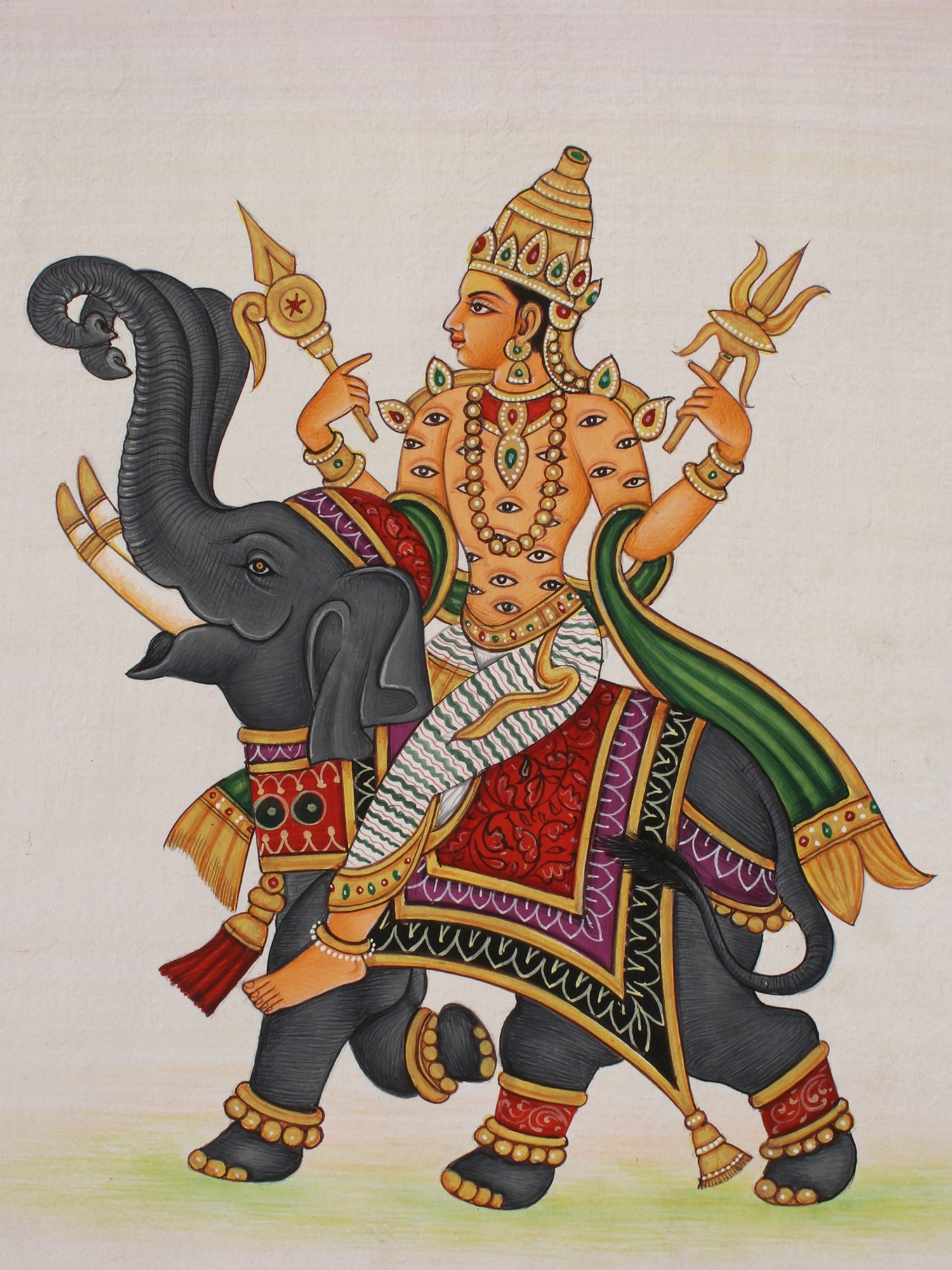
Indra
Hymns: 289
The King of the Gods, wielder of the *Vajra* (thunderbolt), and the primary warrior-hero who slays the serpent Vṛtra to release the waters.
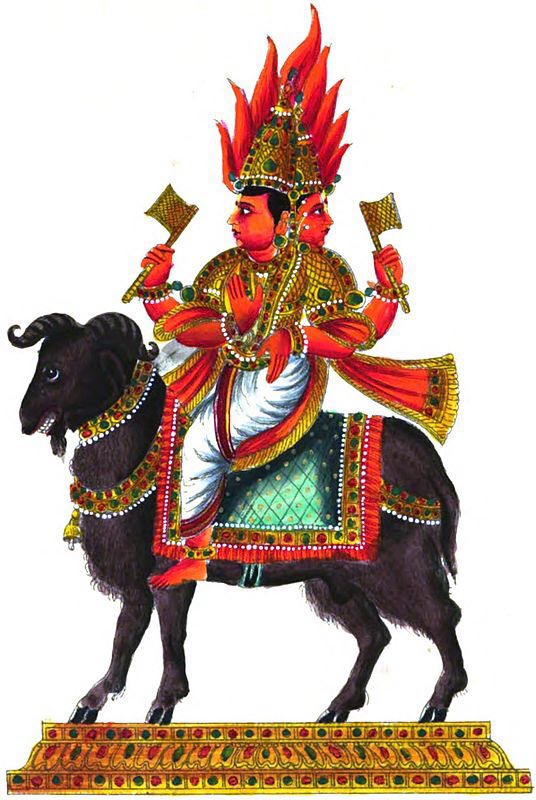
Agni
Hymns: 197
The God of Fire, who is both the sacrificial fire and the divine messenger carrying oblations from humans to the gods.
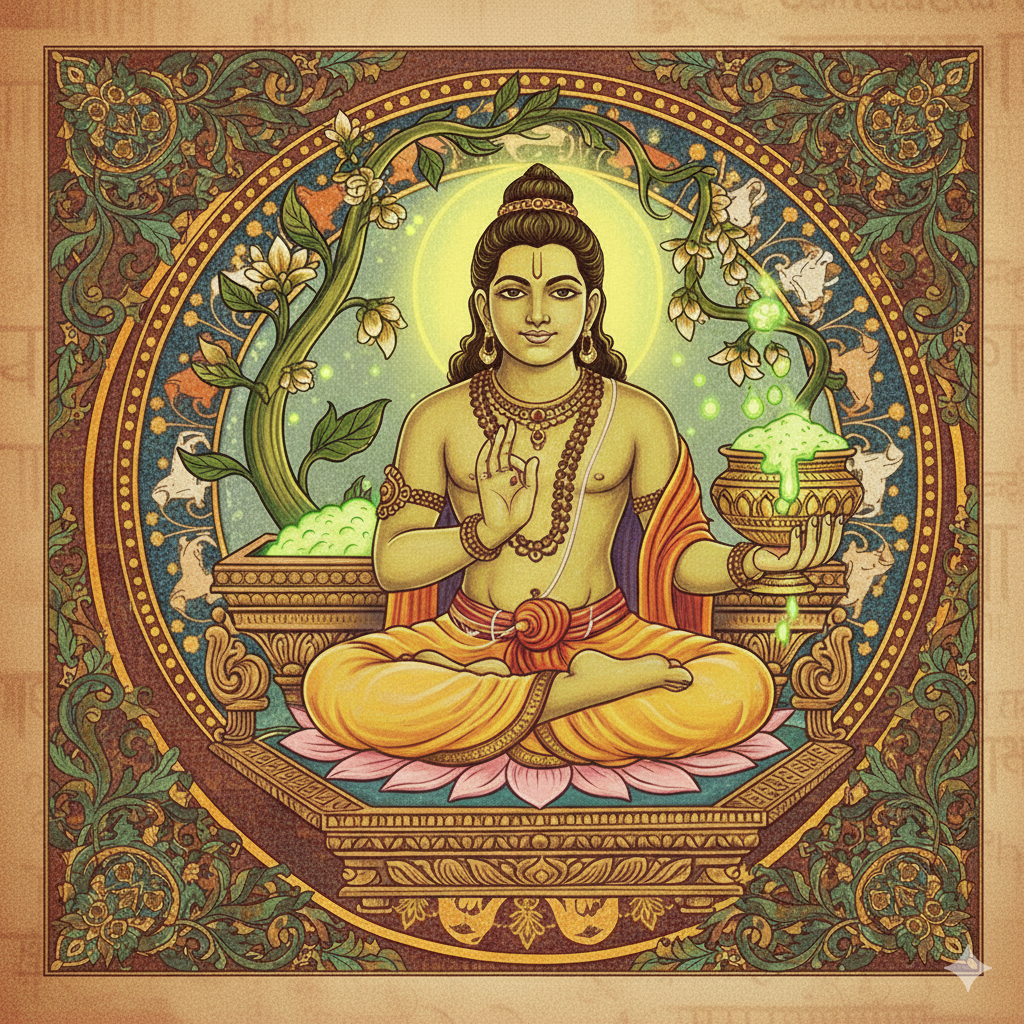
Soma
Hymns: 126
The deity of the sacred, intoxicating juice, who is also identified with the Moon, presiding over life, immortality, and inspiration.

All the Gods
Hymns: 67
A collective term (*Viśvedevas*) for the entire host of gods, invoked to ensure no deity is accidentally omitted from the sacrifice.
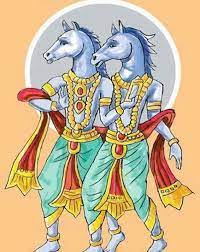
Asvins
Hymns: 58
The youthful twin horsemen, divine physicians who rescue and heal mortals and are associated with the morning light.
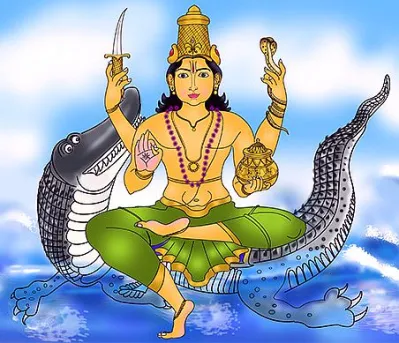
Varuna
Hymns: 45
The great upholder of Cosmic and Moral Law (*Ṛtá*), who rules the celestial ocean and punishes sinners with binding fetters.

Maruts
Hymns: 39
A troop of storm gods, sons of Rudra and Pṛśni, who accompany Indra and embody the raw, dynamic energy of the wind and rain.
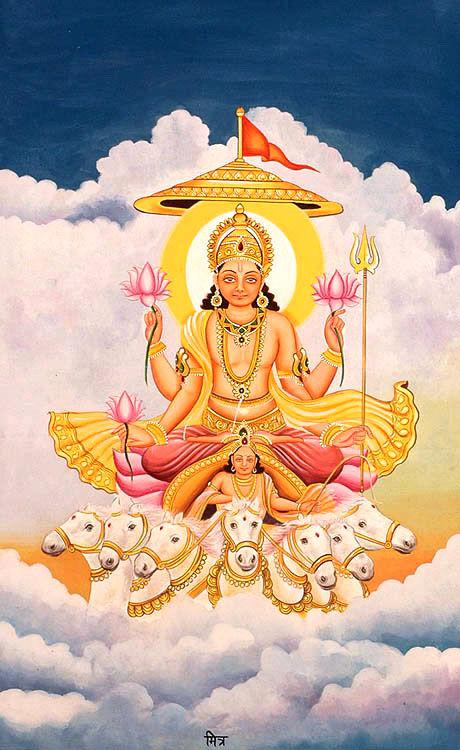
Mitra
Hymns: 27
An Aditya, the god who is the embodiment of friendship, contracts, alliances, and all things orderly and benevolent.
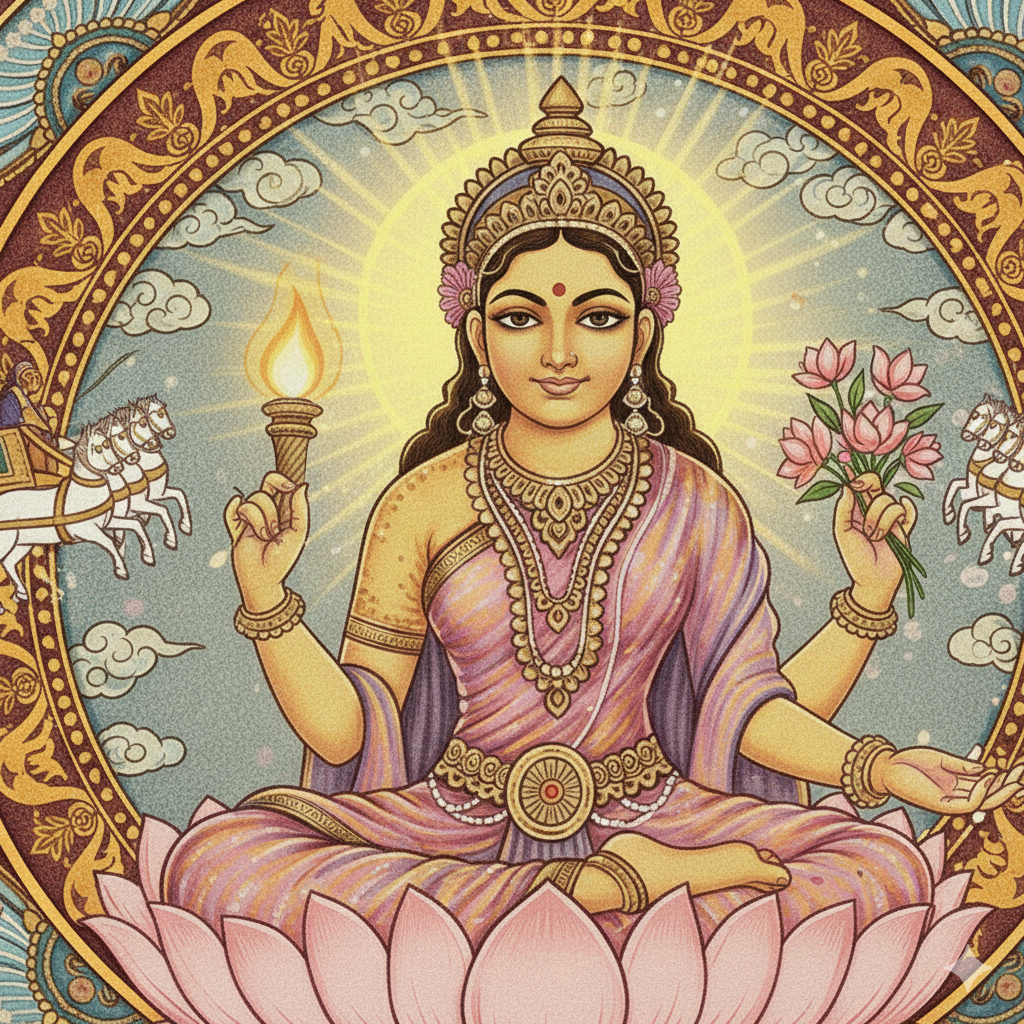
Usas
Hymns: 21
The Goddess of Dawn, a beautiful and radiant figure who renews life daily and drives away the dark fiends of night.

Vayu
Hymns: 11
The God of Wind and Air, the breath of the cosmos, often paired with Indra and noted for his swift movement.

Ribhus
Hymns: 11
A triad of divine artisans (Ribhu, Vāja, and Vibhvan) whose extraordinary skill elevates them to a share in divine worship.
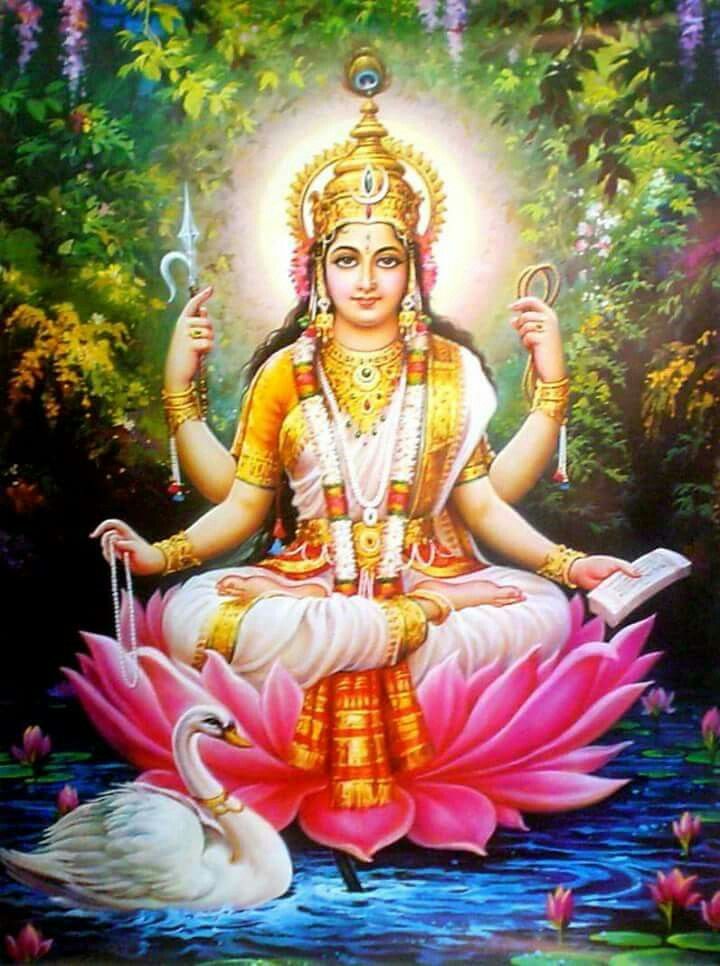
Savitri
Hymns: 11
The 'Impeller,' a solar deity who represents the stimulating, quickening force of the sun just before it rises or during its course.
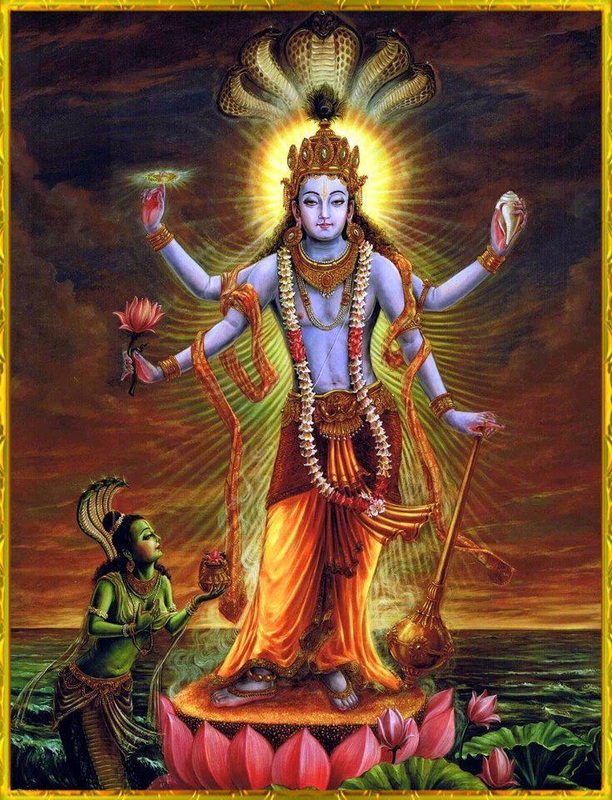
Pusan
Hymns: 11
An Aditya, the solar deity who is the patron of paths, protector of livestock, and guide for journeys and souls.

Agni Vaisvanara
Hymns: 11
An epithet of Agni meaning 'belonging to all men' or 'Universal Fire', representing fire as a cosmic and pervasive force.
Apri Hymn
Hymns: 10
A sequence of ritual invocations addressing a set of personified objects and minor deities involved in the preparation and offering of the sacrifice.
Diverse Gods
Hymns: 10
A collective term (*Viśvedevas*) for the entire host of gods, invoked to ensure no deity is accidentally omitted from the sacrifice.
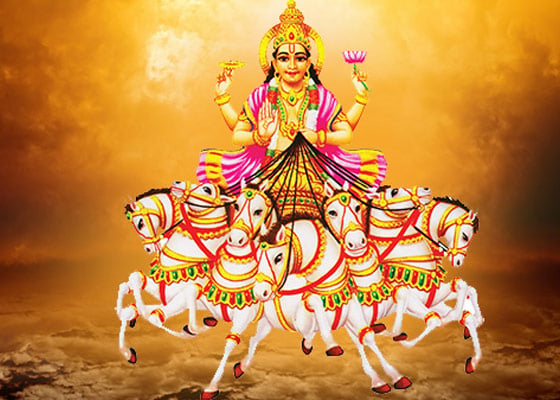
Surya
Hymns: 10
The Sun God, the most visible celestial deity, who rides across the sky in his chariot, dispelling darkness and observing all deeds.
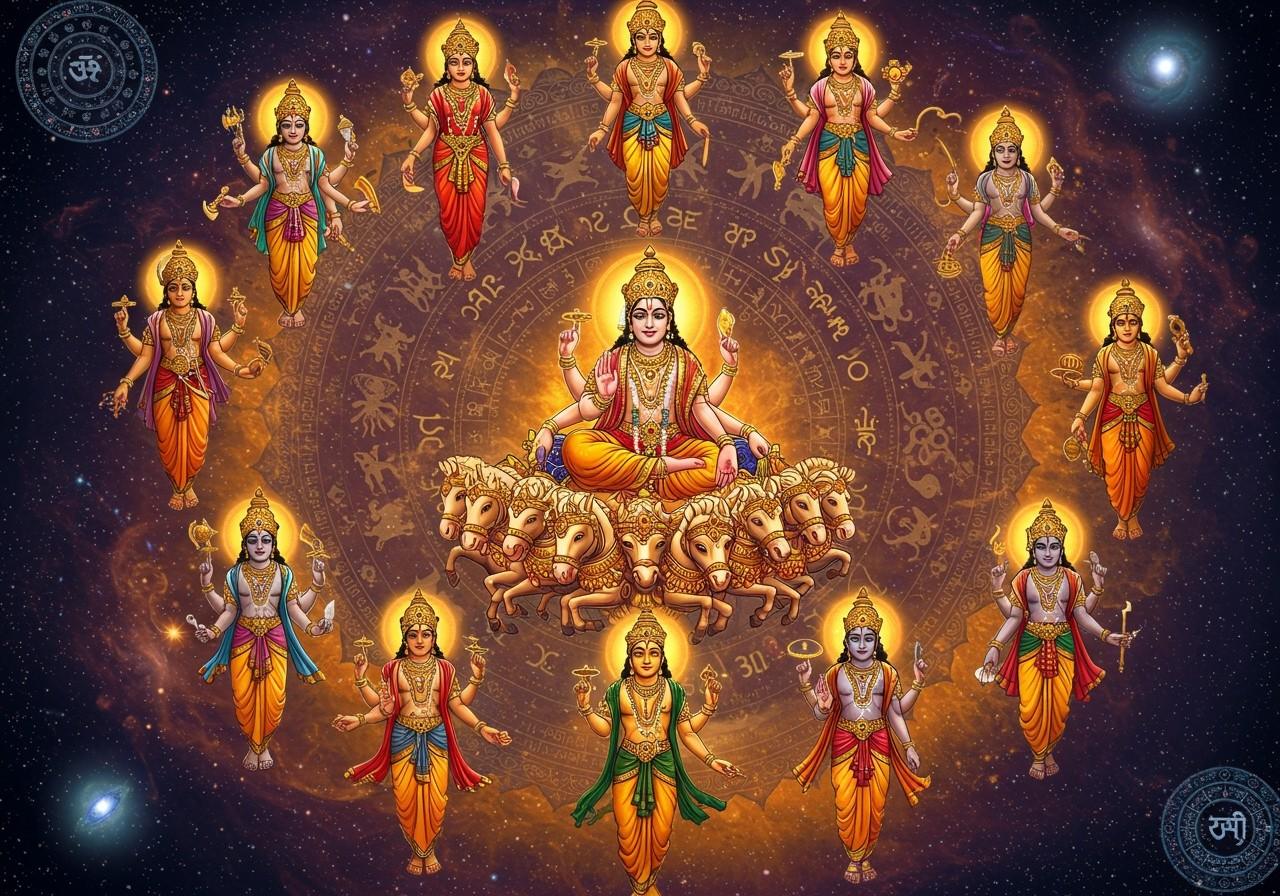
Adityas
Hymns: 8
A collective group of celestial deities, the sons of Aditi, who are guardians of the cosmic and moral order (*Ṛtá*).
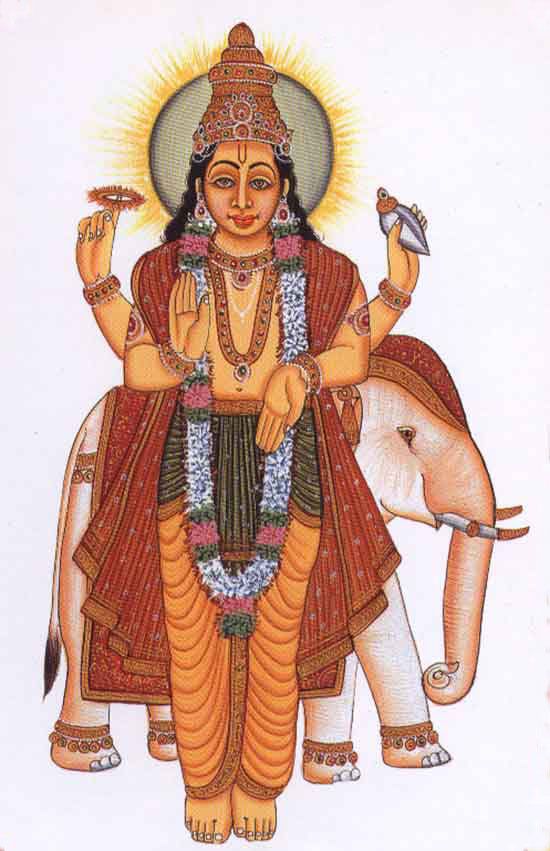
Brihaspati
Hymns: 8
The celestial priest and counselor of the gods, who personifies piety and the power of devotion and speech.
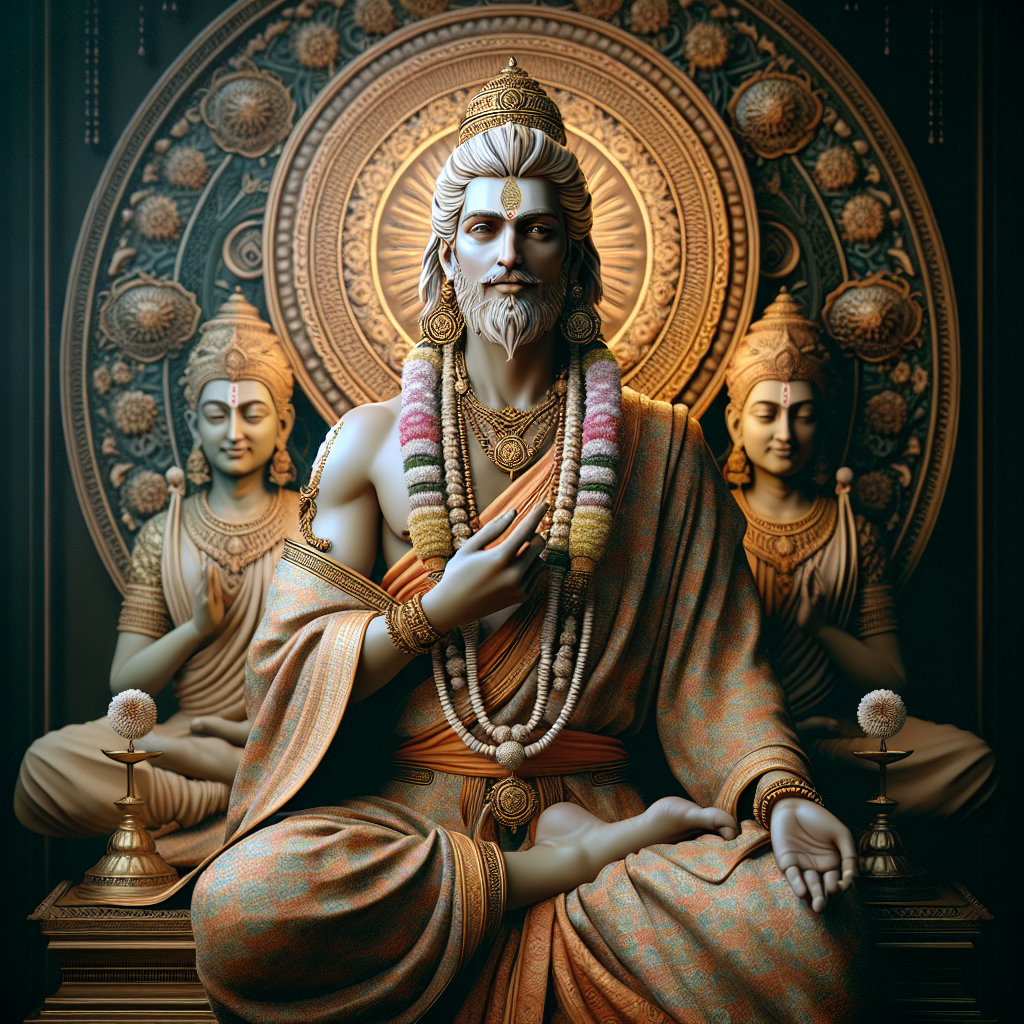
Brahmanaspati
Hymns: 6
The 'Lord of Prayer' or 'Master of the Sacred Word,' a deified form of priestly power and wisdom, often identified with Bṛhaspati.
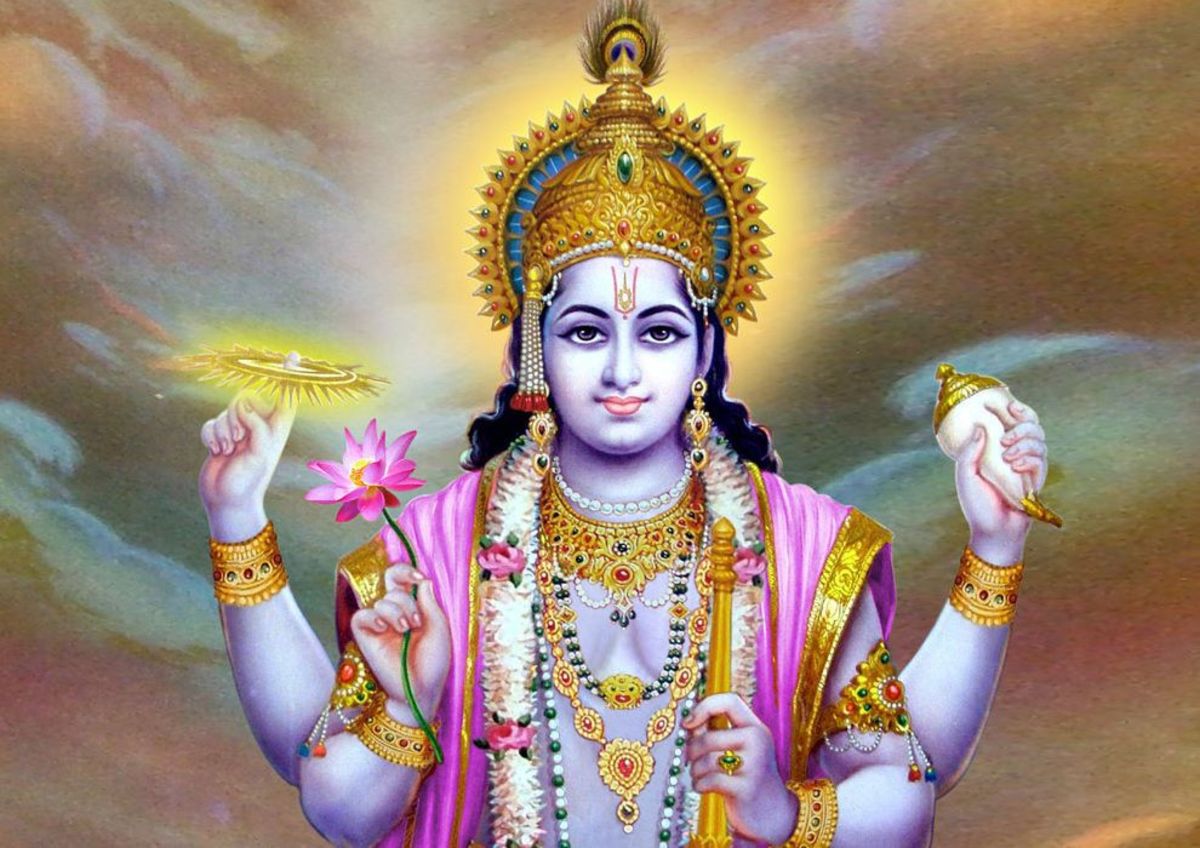
Vishnu
Hymns: 6
A minor but significant Vedic deity, famous for his three strides across the cosmos, upholding and pervading the three worlds.
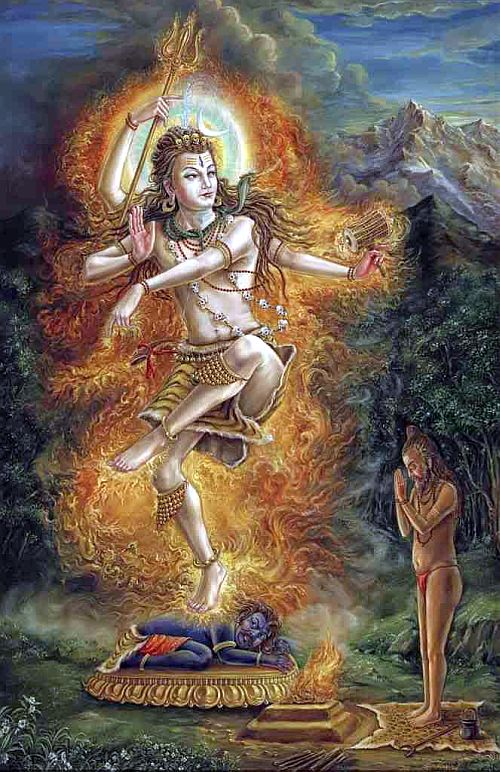
Rudra
Hymns: 5
The formidable archer god of storms, wind, and medicine, who can be both terrifyingly destructive and benevolently healing.
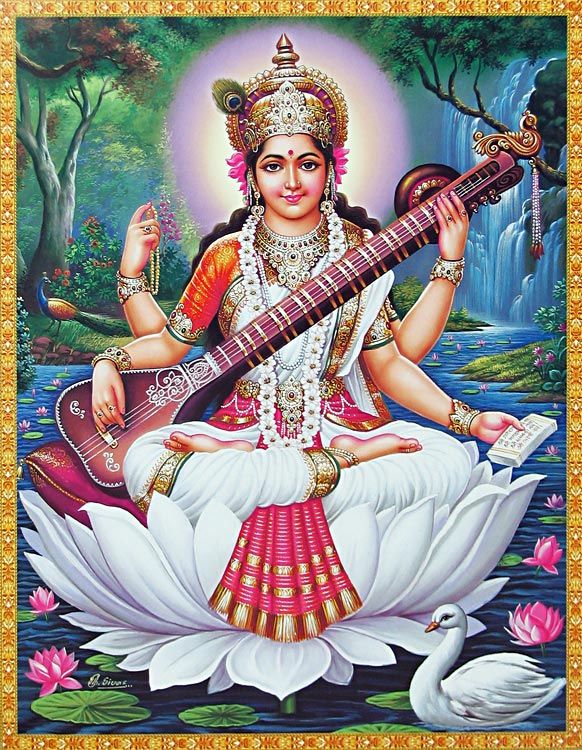
Sarasvati
Hymns: 4
The Goddess of the Sarasvati River, who also embodies the potent flow of speech, knowledge, and wisdom.
Dadhikra
Hymns: 4
A deified racehorse or warhorse, renowned for its swiftness and power, and associated with the vigor of the dawn.
Parjanya
Hymns: 3
The God of Rain, thunder, and fertilization, whose domain is the generation of life and growth.
Aditi
Hymns: 2
The boundless mother goddess, often described as the great cosmic expanse and the mother of the Adityas (celestial gods).
Sarasvat
Hymns: 2
The male counterpart to Sarasvati, a minor deity associated with the mighty river and the nourishing power of water.
Yama
Hymns: 2
The first mortal who died, becoming the King of the Dead and the guide who leads the departed souls to the ancestral realm (*Pitṛloka*).
Visvakarman
Hymns: 2
The 'All-Maker' or Divine Architect, the personification of the creative power behind the universe and the ultimate sacrificer.
Sadasaspati
Hymns: 1
The 'Lord of the Assembly Hall,' a guardian deity of the sacrificial venue who ensures the success and order of the ritual gathering.
Agni Giver of Goods
Hymns: 1
An epithet of the Fire God, Agni, emphasizing his role as the benevolent provider and source of wealth.
Surya the Sun-God
Hymns: 1
A clarifying title for the Sun God, Sūrya, the visible celestial orb whose light sustains and governs the day.
Apam Napat
Hymns: 1
The 'Child of the Waters,' a deity associated with the swift movement of water and often identified with Agni residing in the depths.
Agni Killer of Demons
Hymns: 1
An epithet of Agni, invoking his power as a fierce deity who destroys malevolent spirits and enemies of the ritual.
Bhaga
Hymns: 1
An Aditya, the god of wealth, fortune, and the fair distribution of resources.
Vastospati
Hymns: 1
The 'Lord of the Dwelling,' a protective deity invoked for the safety, blessing, and successful construction of the house and home.
Mitra-Varuna
Hymns: 1
A dual deity representing the two sides of sovereign power: Mitra as the orderly, contractual aspect, and Varuṇa as the mysterious, forceful aspect.
Vak
Hymns: 1
A shorter form of *Vāc*, the Goddess of the Voice and the Word, embodying the essential power of expression and knowledge.
Yami
Hymns: 1
The twin sister of Yama, associated with the origin of mortality, twinship, and the link between the living and the dead.
Ancestors
Hymns: 1
The *Pitṛs* or forefathers, the deified spirits of the departed who dwell in a separate realm and receive funeral offerings.
Manyu (Wrath)
Hymns: 1
The deified personification of war-fury, wrath, and battle-strength, invoked to secure triumph over enemies.
Manyu
Hymns: 1
The deified personification of war-fury, wrath, and battle-strength, invoked to secure triumph over enemies.
Vaisvanara
Hymns: 1
The 'Universal Fire,' an epithet of Agni that stresses his pervasive nature, existing in all of nature and in the human body.
Urvasi
Hymns: 1
A famous celestial nymph (*Apsara*), whose beauty and association with water/sky make her a figure of desire and a mystic element in dialogue hymns.
Vena
Hymns: 1
A celestial being or figure representing the light of love and desire, sometimes interpreted as a form of the sun or a Gandharva.
Vac (Speech)
Hymns: 1
The Goddess of the Voice and the Word, personifying the power of articulated language and the divine basis of utterance.
Aranyani
Hymns: 1
The Goddess of the Forest and wild places, praised in her lone hymn as a benevolent but elusive mistress of the wilderness.
Vata (The Storm)
Hymns: 1
The personification of the fierce, powerful aspect of the storm wind, associated with great speed and noise.
Tarksya
Hymns: 1
A mythical, swift-winged being, often an eagle or horse, representing strength, speed, and solar power, sometimes identified with Garuḍa.
Agni Jatavedas
Hymns: 1
An epithet of Agni meaning 'knower of all births' or 'knower of all things', highlighting his omniscience.
The Seers (Rishis)

Vasishtha Maitravaruni
Family: Maitravaruni
Hymns: 104
The patriarch and principal seer of **Rigveda Mandala 7**. Born of Mitra and Varuna, he is one of the Saptarishis and the revered priest of the Bharata tribe. He is the author of the **Maha Mrityunjaya Mantra**.
Atri Bhauma
Family: Atreya
Hymns: 87
The patriarch of the Atri family and the principal seer of **Rigveda Mandala 5**. Known for his intense penance, which saved mankind from drought. 'Bhauma' indicates his connection to the earth.
Tirasci
Family: Angirasa
Hymns: 76
A seer from the Angiras lineage, credited with Rigveda Mandala 10 (hymn 53). His hymns contain profound praise for the gods, reflecting Angiras' tradition.
Bharadvaja Barhaspatya
Family: Barhaspatya
Hymns: 75
The principal seer of **Rigveda Mandala 6**. Son of Brihaspati, he is one of the Saptarishis and a revered figure whose lineage is a major branch of the Angirasa clan. He is known for his wisdom.
Vishvamitra Gathina
Family: Gathina
Hymns: 62
The principal seer of **Rigveda Mandala 3**. A legendary figure who was a Kshatriya king (Gathina is his patronymic) and, through austerity, became a Brahmarshi. He is the author of the **Gayatri Mantra**.
Vamadeva Gautama
Family: Gautama
Hymns: 58
The principal seer of **Rigveda Mandala 4**. A celebrated sage of the Angirasa-Gautama lineage, known for his mystical hymns that explore the relationship between the self and the cosmos.
Gritsamada Saunahotra
Family: Saunahotra
Hymns: 43
The principal seer of **Rigveda Mandala 2**. He is often referred to as a son of Sunahotra and is considered by some to be a **descendant of the Bhrigu lineage**, though his earlier lineage was Angirasa.
Medhatithi
Family: Kanva
Hymns: 27
An early sage of the Kanva family, credited with being the seer of a significant portion of the early hymns in Rigveda Mandala 1 (hymns 12-23). He is a foundational figure for the Kanva school.
Agastya
Family: Maitravaruni
Hymns: 27
A revered sage, born from Mitra and Varuna. He is the principal seer of Rigveda Mandala 1 (hymns 165-191). He is also celebrated in post-Vedic literature as the pioneer of Vedic culture in Southern India.
Dirghatamas
Family: Ausathya
Hymns: 25
A highly revered sage, son of Usathya (Usija) and Mamateya. He is the seer of Rigveda Mandala 1 (hymns 140-164). His famous hymn 1.164 contains profound cosmological and philosophical riddles.
Kutsa Angirasa
Family: Angirasa
Hymns: 22
A distinguished seer of the Angiras lineage, noted for his close association with the god Indra. He is credited with several hymns in Rigveda Mandala 1 (hymns 97-115) and later texts.
Gotama
Family: Angirasa
Hymns: 20
A celebrated sage and head of the Gautama clan (a sub-clan of Angirasa). He is credited with several hymns in Rigveda Mandala 1 (hymns 74-93) and is one of the seven Saptarishis in the current Manvantara.
Sons of Kanva
Family: Kanva
Hymns: 17
A collective of seers from the Kanva family who composed many hymns, making them the principal seers of the whole of Rigveda Mandala 8 (except the latter part).
Parucchepa
Family: Daivodasi
Hymns: 13
A seer of Rigveda Mandala 1 (hymns 127-139). His hymns are known for their praise of Agni and the Maruts, reflecting a distinct style within the first Mandala.
Madhucchandas
Family: Vaishvamitra
Hymns: 11
Son of Vishvamitra and seer of the first ten hymns of Rigveda Mandala 1. He is famous for establishing the tradition of hymn composition and is a key figure in the Vishvamitra lineage.
Nodhas
Family: Gotama
Hymns: 11
A sage and son of Gotama. He is the seer of Rigveda Mandala 1 hymns 58-64 and is noted for his praise of Agni and Indra.
Kaksivat
Family: Ausija
Hymns: 11
Son of Dirghatamas and Usik. He is the seer of Rigveda Mandala 1 (hymns 116-126), known for his rich collection of hymns, many of which praise the Ashvins and Indra.
Virupa
Family: Angirasa
Hymns: 11
A seer from the Angiras lineage, credited with hymns in Rigveda Mandala 8 (hymns 43-45). His contributions are a part of the diverse Angiras collection in the eighth Mandala.
Krishna
Family: Angirasa
Hymns: 11
A seer from the Angiras lineage, credited with Rigveda Mandala 10 (hymn 42). He is distinct from the later deity Krishna and is known for his praise of Indra.
Parasa
Family: Gautama
Hymns: 9
A sage of the Gautama lineage and seer of Rigveda Mandala 1, hymn 65. His contribution, though small, is part of the extensive collection in the first Mandala.
Trita Aptya
Family: Aptya
Hymns: 9
A semi-divine sage of the waters, credited with several hymns in the Rigveda, including parts of Mandala 10 (hymns 57-59). He is a significant figure in Vedic mythology, often invoked for purification and healing.
Kanva
Family: Kanva
Hymns: 8
A patriarch and founder of the Kanva family (Kanvayana). He is credited with seeing many hymns, primarily in Mandala 1, and his descendants (the Kanvas) are the principal seers of Mandala 8.
Ekadyu
Family: Naudhasa
Hymns: 8
A seer of Rigveda Mandala 10 (hymns 49). He is often identified as a poet who praises Indra and is connected to the lineage of Nodhas.
Praskanva
Family: Kanva
Hymns: 7
A descendant of Kanva, credited with seeing several important hymns in Rigveda Mandala 1 (hymns 44-50). He is a significant composer in the Kanva lineage.
Savya
Family: Angirasa
Hymns: 7
A seer from the Angiras lineage, credited with composing hymns in Rigveda Mandala 1 (hymns 51-57). His hymns are particularly focused on the praise of Indra.
Pragatha
Family: Kanva
Hymns: 7
A collective term for some seers (or a specific rishi) of the Kanva lineage, credited with hymns in Rigveda Mandala 8 (hymns 51-54). The hymns are often in a specific meter, hence the name (Pragatha meter).
Vimada
Family: Aindra
Hymns: 7
A seer of Rigveda Mandala 10 (hymns 20-26). He is famous for his hymns to Agni, Indra, and the Maruts, and is closely associated with the god Indra.
Vatsa
Family: Kanva
Hymns: 6
A seer from the Kanva lineage, credited with several hymns in Rigveda Mandala 8 (hymns 6 and 11). His name is also often used as a patronymic, indicating a descendant of Vatsa.
Vasa
Family: Aurava
Hymns: 6
A seer of the Bhrigu lineage, credited with hymns in Rigveda Mandala 8 (hymns 46-47). He is also known for his hymns to Indra and the Ashvins.
Priyamedha
Family: Angirasa
Hymns: 5
A seer of the Angiras lineage, credited with composing hymns in Rigveda Mandala 8 (hymns 2-3). He represents a key branch of the Angiras school of seers.
Manu Vaivasvata
Family: Vaivasvata
Hymns: 5
The progenitor of humankind in the current cycle (Manvantara), son of Vivasvat (the Sun). He is credited with seeing one hymn in Rigveda Mandala 8 (hymn 27) and is central to later Hindu law and cosmology (Manusmriti).
Kavasa Ailusa
Family: Ailusa
Hymns: 5
A seer of Rigveda Mandala 10 (hymns 30-34), known for his hymns to the Waters and the dice. He was initially excluded from a sacrifice due to his non-Brahmin background, but was later accepted, symbolizing inclusiveness.
Sobhari
Family: Kanva
Hymns: 4
A seer from the Kanva family, credited with Rigveda Mandala 8 (hymns 19-22). His hymns are known for their praise of the Ashvins and Indra, and his name is mentioned in the Puranas.
Vyasva
Family: Angirasa
Hymns: 4
A seer from the Angiras lineage, credited with hymns in Rigveda Mandala 8 (hymns 23-26). His hymns are noted for their focus on the deity Indra.
Syavasva
Family: Atreya
Hymns: 4
A seer from the Atri lineage, credited with a significant collection of hymns in Rigveda Mandala 5 (hymns 52-61). His work is a major part of the Atri family book.
Nabhaka
Family: Kanva
Hymns: 4
A seer of the Kanva lineage, credited with Rigveda Mandala 8 (hymn 37), noted for his praise of Indra.
Lusa
Family: Dhanaka
Hymns: 4
A seer of Rigveda Mandala 10 (hymn 35), noted for his praise of Ushas (Dawn) and other deities. Little is known about his family name, other than a possible patronymic Dhanaka.
Gaupayana
Family: Angirasa
Hymns: 4
A seer from the Angiras lineage, credited with hymns in Rigveda Mandala 10 (hymns 56 and 57). He is known for his praise of the deities and philosophical exploration of the self.
Gopavana
Family: Atreya
Hymns: 3
A seer from the Atri lineage, credited with Rigveda Mandala 10 (hymns 47-48). His hymns focus on the praise of Indra.
Sons of Atri
Family: Atreya
Hymns: 3
A collective of seers from the Atri family, principally responsible for the hymns of Rigveda Mandala 5. They are known for their devotion and their hymns to various deities, especially Agni and Indra.
Srutakaksu
Family: Angirasa
Hymns: 3
A seer from the Angiras lineage, credited with Rigveda Mandala 10 (hymns 50-52). He is noted for his hymns to Indra and Agni.
Vasukra
Family: Aindra
Hymns: 3
A seer of Rigveda Mandala 10 (hymn 27). He is noted for his praise of Indra, and the hymn is often referred to as the 'Vasukra' hymn.
Ghosa
Family: Kaksivata
Hymns: 3
A female seer (*Brahmavadini*) and daughter of Kaksivat. She is the seer of Rigveda Mandala 10 (hymns 39-40), hymns which are primarily addressed to the Ashvins and speak of her own life and wish for a husband.
Vatsapri
Family: Bhalandana
Hymns: 3
A seer of Rigveda Mandala 10 (hymns 45-46), known for his hymns to Agni. His hymns explore the form and function of the fire god.
Brihaduktha
Family: Vamadevya
Hymns: 3
A seer of Rigveda Mandala 10 (hymn 54), often considered a descendant of Vamadeva. His hymn is a strong praise of the deity Indra.
Nabhanedistha
Family: Manava
Hymns: 2
Son of Manu Vaivasvata, credited with Rigveda Mandala 10 (hymns 61-62). He is a foundational figure in the solar dynasty and his hymns are noted for their ritual and philosophical content.
Gaya Plata
Family: Atreya
Hymns: 2
A seer from the Atri lineage, credited with Rigveda Mandala 10 (hymn 63). His hymns focus on the praise of the Vishvedevas (All-Gods).
Vasukarna
Family: Vasishtha
Hymns: 2
A seer of the Vasishtha family, credited with Rigveda Mandala 10 (hymn 65). He is a part of the lineage that composed the seventh Mandala.
Ayasya
Family: Angirasa
Hymns: 2
An ancient and revered seer of the Angiras lineage, often mentioned in connection with the Navagwas and Dashagwas (ancient priestly clans). He is credited with several hymns in the Rigveda, including parts of Mandala 9.
Sumitra
Family: Kanva
Hymns: 2
A seer of the Kanva family, credited with Rigveda Mandala 10 (hymn 74). His hymns are noted for their praise of the Maruts and Indra.
Brihaspati
Family: Angirasa
Hymns: 2
The divine priest and preceptor of the gods (Guru of the Devas). He is the son of Angiras and a sage, credited with several hymns in the Rigveda (e.g., Mandala 10, hymn 71). The Bharadvajas trace their lineage to him.
Gauriviti
Family: Saktiya
Hymns: 2
A seer of Rigveda Mandala 10 (hymn 76), often identified as a descendant of the sage Shakti, Vasistha's son. He is noted for his hymns to the Ashvins and Agni.
Syumarasmi
Family: Bhrigavah
Hymns: 2
A seer of Rigveda Mandala 10 (hymn 77-78), from the Bhrigu lineage. His hymns are focused on the praise of Agni.
Visvakarman Bhauvana
Family: Bhauvana
Hymns: 2
A seer of Rigveda Mandala 10 (hymns 81-82), noted for his philosophical and cosmological vision. His hymns contain the famous 'Visvakarman Sukta' which deals with the architect of the universe.
Manyu
Family: Taapasa
Hymns: 2
The seer of the famous 'Manyu Sukta' (Rigveda Mandala 10, hymn 83-84), which is a powerful hymn deifying wrath or war-fury. His family name is often associated with the concept of Tapas (penance/heat).
Key Philosophical Concepts
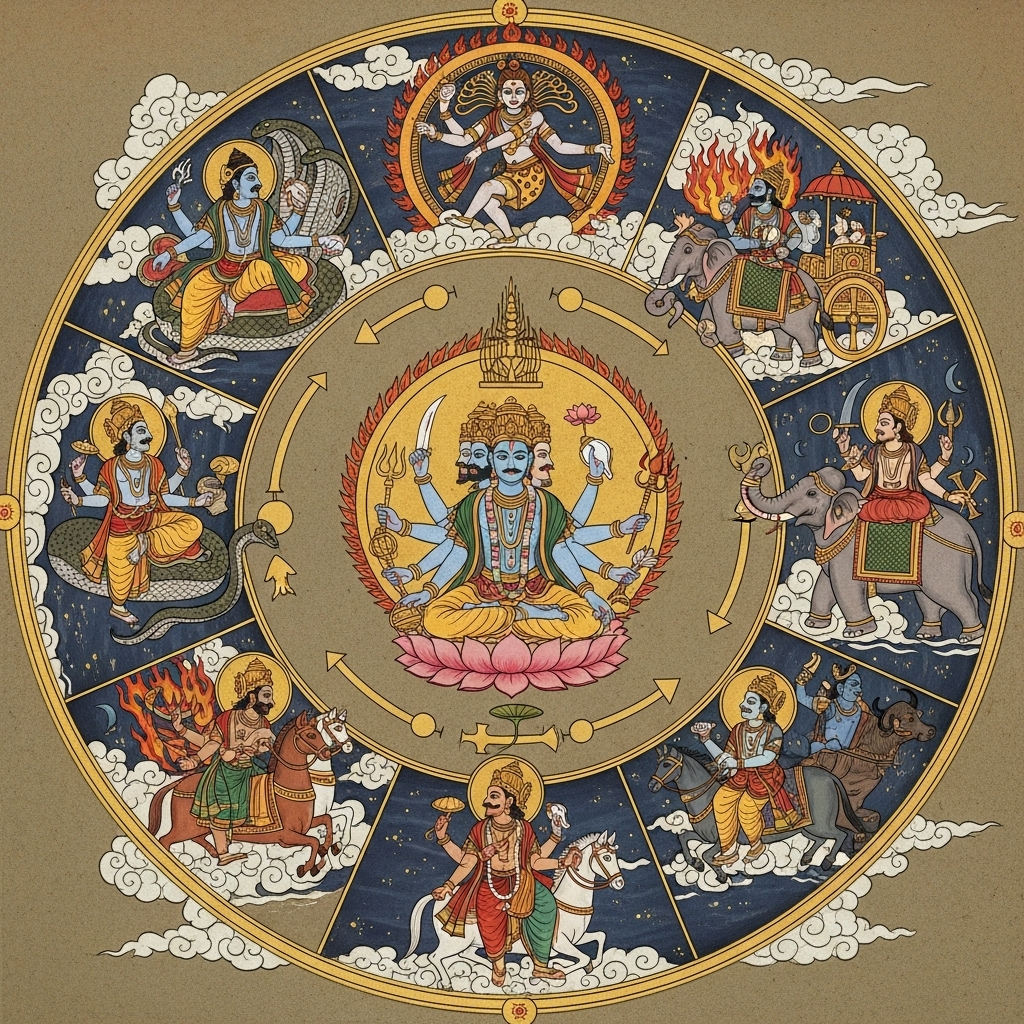
Cycle of the Gods
Hymns: 3
These hymns describe the repeating cycles of divine activity — how the gods renew their powers, sustain cosmic order, and participate in the eternal rhythm of creation and offering.

Dialogue Between Indra, The Maruts and Agastya
Hymns: 2
This dialogue explores cooperation and conflict among gods and seers. Agastya’s wisdom and the Maruts’ energy balance Indra’s power, showing harmony between strength, guidance, and understanding.
Thanksgiving
Hymns: 2
These hymns express gratitude for divine help and blessings received. They show the early spirit of thankfulness — recognizing success, safety, and prosperity as gifts of the gods.
Indra's Praise of Himself
Hymns: 2
Indra speaks of his own might and victories, reminding listeners of the power of self-confidence and divine energy. It reflects the Vedic idea that acknowledging one’s strength can itself be sacred.
Killer of Raksas
Hymns: 2
These hymns celebrate the destruction of demonic or harmful forces (Raksas). They stand for the triumph of light, order, and truth over darkness and chaos.
Against Rivals in Love
Hymns: 2
A charm-like hymn used to secure affection and harmony. It reveals how the Vedic people sought divine help even in matters of the heart and emotion.
Against Emaciation
Hymns: 2
A healing prayer calling upon divine power to restore health, strength, and vitality — showing the Vedic blend of spiritual invocation and practical concern for well-being.
Simplified Pressing of Soma
Hymns: 1
This hymn simplifies the ritual act of pressing Soma, the sacred drink of inspiration. It focuses on devotion and purity rather than complex ceremony.
Indra, Final Verses Asvins and Usas
Hymns: 1
This set of verses praises Indra’s strength, the healing Asvins, and the dawn goddess Usas — together symbolizing energy, renewal, and daily rebirth.
All the Gods (Trita in the Well)
Hymns: 1
The story of Trita, who is trapped in a well and prays to the gods for rescue. It symbolizes the human call for divine help in times of struggle and confinement.
Praise of the Generous Sacrificer
Hymns: 1
This hymn honors those who give freely in ritual and life — celebrating generosity as a sacred act that supports gods, priests, and community alike.
Thanks for a Present
Hymns: 1
A short hymn of gratitude for a gift received, showing the human warmth and mutual respect that existed between donors and singers.
All the Gods (Riddle Song)
Hymns: 1
A famous hymn of riddles and symbolic language that explores creation, order, and mystery — encouraging thought, curiosity, and wonder about the universe.
Dialogue Between Agastya, Indra and the Maruts
Hymns: 1
Agastya mediates between Indra and the Maruts, restoring cooperation among divine forces. It highlights wisdom’s role in settling conflict and preserving balance.
Against Venomous Animals
Hymns: 1
A protective charm invoking divine help to ward off bites and poisons from snakes and other creatures — part of the Vedic concern for safety and health.
Gods of the Field (Charm for Unfruitful Land)
Hymns: 1
A prayer to the gods of the field to bless barren soil and make it fertile — showing how agriculture and divinity were deeply connected in Vedic life.
Blessing of Weapons
Hymns: 1
This hymn blesses weapons used in defense and warfare, asking that they serve justice, courage, and right purpose rather than harm or cruelty.
Lullaby
Hymns: 1
A gentle hymn meant to bring peace and rest — calming the mind, home, and child under divine protection during the night.
Praise of the Sacrificer and His Wife
Hymns: 1
A hymn praising the sacrificer and his partner, recognizing both as essential to the ritual — symbolizing unity, cooperation, and shared devotion.
Fragment
Hymns: 1
A brief, possibly incomplete hymn that still reflects the Vedic tone of reverence, order, and offering — a surviving piece of a larger sacred expression.
Praise of the Oblations
Hymns: 1
These verses celebrate the offerings themselves as living gifts to the gods — turning material action into spiritual connection.
For the Burial Rite
Hymns: 1
A funeral hymn that guides the departed soul and comforts the living — showing the Vedic sense of reverence and continuity after death.
Indra, a Dispute
Hymns: 1
Indra is questioned or challenged, revealing the complex, human-like traits of the gods — confidence, doubt, and dialogue between strength and wisdom.
A Singer's Lament
Hymns: 1
A personal hymn where the poet expresses sorrow or neglect, turning emotional pain into sacred song — one of the earliest reflections of inner feeling in world poetry.
Hymn of the Gambler
Hymns: 1
A famous moral hymn where a gambler reflects on addiction and loss — a timeless portrayal of temptation, regret, and the desire for self-control.
Dialogue Between the Gods and Agni
Hymns: 1
The gods speak with Agni, the fire deity, about his place and duties — exploring themes of service, sacrifice, and the bond between gods and humans.
Continuation of the Dialogue
Hymns: 1
A follow-up to the previous hymn, further describing Agni’s divine role and the cooperation among gods in sustaining the sacrificial order.
Sacrificial Hymn
Hymns: 1
A hymn that outlines the essence of sacrifice — offering, intention, and connection — as the foundation of cosmic and social harmony.
Funeral Speech About a Horse
Hymns: 1
A symbolic hymn spoken over a horse, blending ritual and affection — reflecting respect for the animal that serves gods and humans in sacrifice.
Bringing Back the Spirit
Hymns: 1
A healing invocation meant to restore life-force or consciousness, showing the Vedic idea that spirit and breath can be called back through divine aid.
Praise of Asamati
Hymns: 1
This hymn praises Asamati, a generous patron of the poets — an example of how gratitude and friendship were woven into sacred tradition.
Thanksgiving to Savarni
Hymns: 1
A hymn of thanks to Savarni, expressing appreciation for gifts and blessings — continuing the theme of gratitude and noble generosity.
Hymn of Wisdom
Hymns: 1
A deep and reflective hymn about speech, knowledge, and inspiration — showing how true wisdom is seen as divine illumination through words.
Gods / Hymn of Creation
Hymns: 1
This hymn explores how the universe and the gods came into being — one of the most profound reflections on cosmic origins in ancient thought.
Wedding Hymn
Hymns: 1
A beautiful hymn celebrating marriage as a sacred union. It blesses love, harmony, and the joining of two families under divine witness.
Purusa
Hymns: 1
The Purusa hymn describes the cosmic being whose sacrifice created the universe. It explains how all existence, including society itself, arises from one great whole.
Praise of Healing Plants
Hymns: 1
This hymn honors the healing herbs of the earth as divine helpers — showing early reverence for nature’s medicine and the power of renewal.
Race of Mugdalani
Hymns: 1
A celebratory hymn about victory and strength, linked to the Mugdalani family — reflecting human valor and divine favor working together.
Daksina (Praise of the Singer)
Hymns: 1
This hymn praises the rewards and honor given to singers and priests — recognizing the sacred role of art, devotion, and generosity in ritual life.
Sarama and the Panis
Hymns: 1
A mythic story where Sarama, the divine dog, finds the stolen cows from the Panis (demons). It represents recovery of light, truth, and prosperity.
Praise of Charity
Hymns: 1
A moral hymn that praises giving and kindness. It teaches that generosity connects humans to divine law and brings both joy and abundance.
Soliloquy of One Intoxicated by Soma
Hymns: 1
A lively hymn capturing the ecstatic state of inspiration through Soma — showing how altered awareness can lead to bold insight and divine joy.
Which God
Hymns: 1
The famous refrain ‘To which god shall we offer?’ reflects wonder and inquiry — acknowledging divine mystery beyond fixed names and forms.
The Night
Hymns: 1
A hymn personifying Night as a goddess who protects all beings. It celebrates her beauty, calm, and watchful care over the world.
Origin of Things
Hymns: 1
This is the Rigveda’s great philosophical hymn asking how creation began — exploring mystery, doubt, and the limits of human knowledge.
Creation of the Sacrifice
Hymns: 1
A hymn describing how sacrifice itself came to exist — linking human ritual with the cosmic act that sustains life and order.
The Boy and the Wagon
Hymns: 1
A mysterious and symbolic hymn possibly referring to spiritual awakening or divine play — the child and wagon suggesting movement and discovery.
Faith
Hymns: 1
Faith (Śraddhā) is personified as a divine power. The hymn praises trust and conviction as foundations of both ritual and moral life.
Against a Witch
Hymns: 1
A protective spell intended to drive away harmful magic or deceit — part of the Vedic concern for guarding purity and order against dark forces.
A Woman's Hymn of Triumph
Hymns: 1
A victory song by a woman, celebrating strength and independence — rare and powerful testimony to female voice and agency in the Rigveda.
Against Those Damaing the Foetus
Hymns: 1
Absolution of Sins
Hymns: 1
A hymn of confession and purification, seeking release from wrongdoing and a return to divine harmony — among the earliest known prayers for forgiveness.
Against the Bird of Ill Omen
Hymns: 1
A charm against evil signs or bad omens. It expresses the human wish to turn fear and misfortune away through faith and speech.
Blessing of the Cows
Hymns: 1
A hymn wishing health, fertility, and safety for cows — honoring them as symbols of wealth, nourishment, and divine favor.
Consecration of a King
Hymns: 1
This hymn sanctifies the king’s role as protector and upholder of order. It marks leadership as both divine duty and moral responsibility.
Blessing of a King
Hymns: 1
A prayer for the king’s strength, wisdom, and success — ensuring that his rule brings peace, prosperity, and righteous power.
For the Birth of a Son
Hymns: 1
A family prayer for the safe birth of a son — reflecting the value placed on lineage, continuity, and blessing from the gods.
Prayer for Good Conception and Birth
Hymns: 1
A hymn asking for health and success in conception and childbirth — celebrating life’s beginning as a sacred process watched over by the divine.
Tapas
Hymns: 1
This hymn praises inner heat and spiritual effort (Tapas) — the power of discipline and concentration that gives rise to creation and enlightenment.
Hymn of Unison
Hymns: 1
A closing hymn calling for unity of hearts, minds, and purpose — expressing the ideal of social and spiritual harmony that ends the Rigveda.
Animals in the Rigveda

Bird of Omen
Hymns: 2
These hymns mention birds whose movements and calls were seen as signs from the gods. The seers looked to them for guidance, believing that nature could reveal divine intentions through such omens.
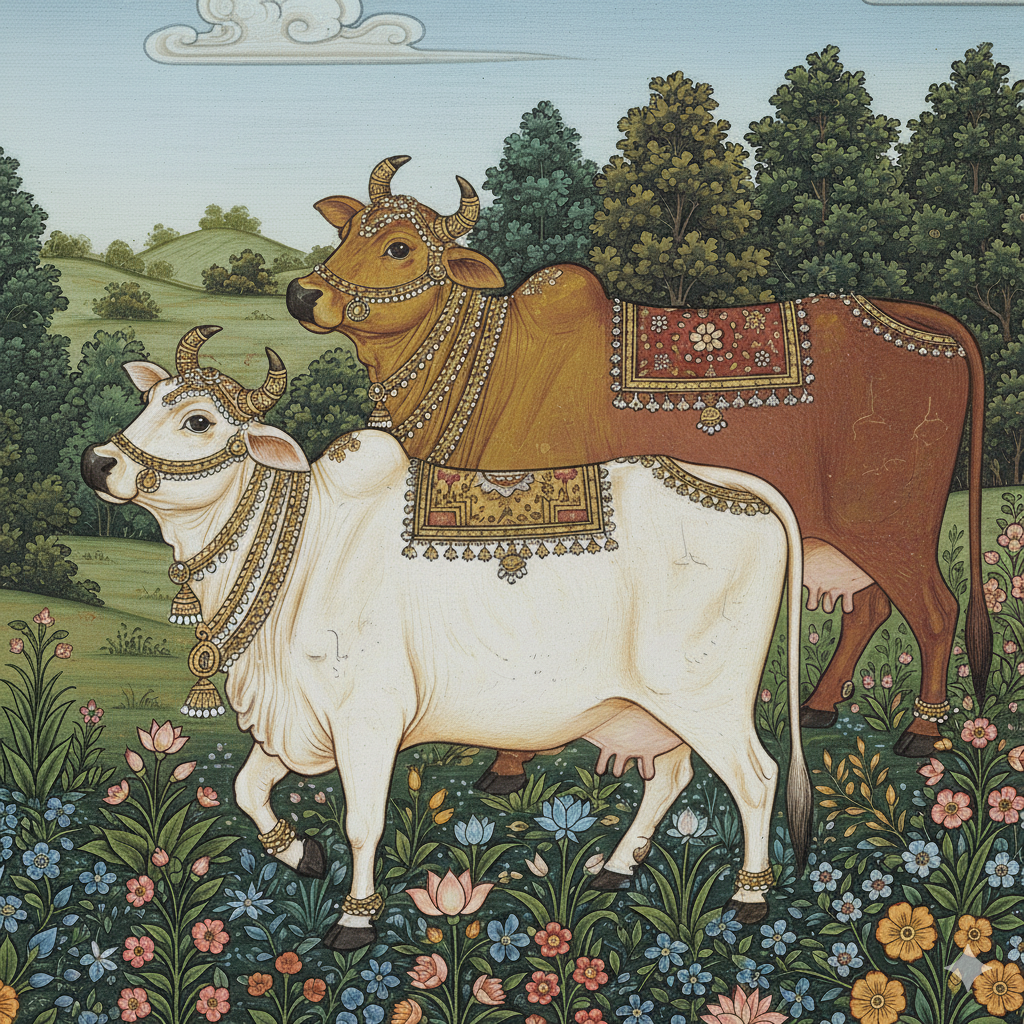
Cows
Hymns: 2
Cows were central to Vedic life — symbols of wealth, food, and good fortune. These hymns praise cows for their milk and nurturing nature, treating them as gifts from the gods that bring peace and prosperity.
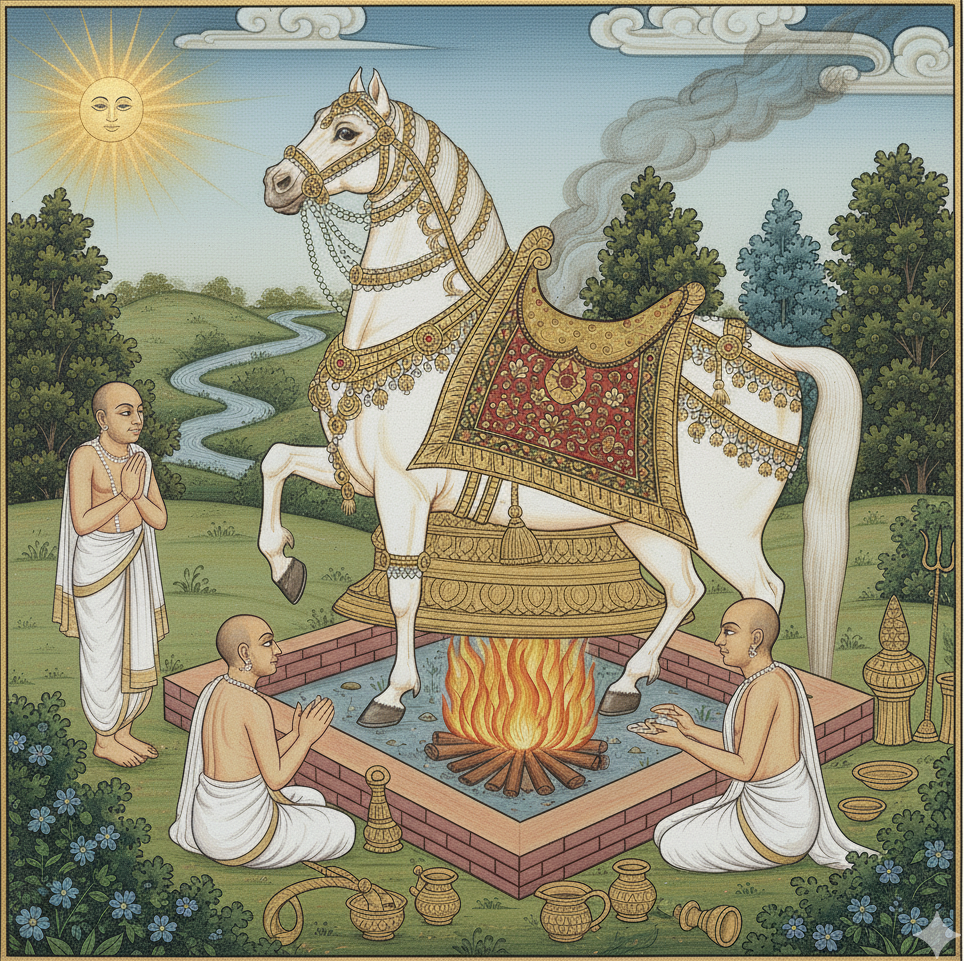
Sacrificial Horse
Hymns: 1
The horse in this hymn is part of the great royal sacrifice called Ashvamedha. It represents strength, power, and kingship. The ritual connects the ruler’s success with the order and energy of the universe.
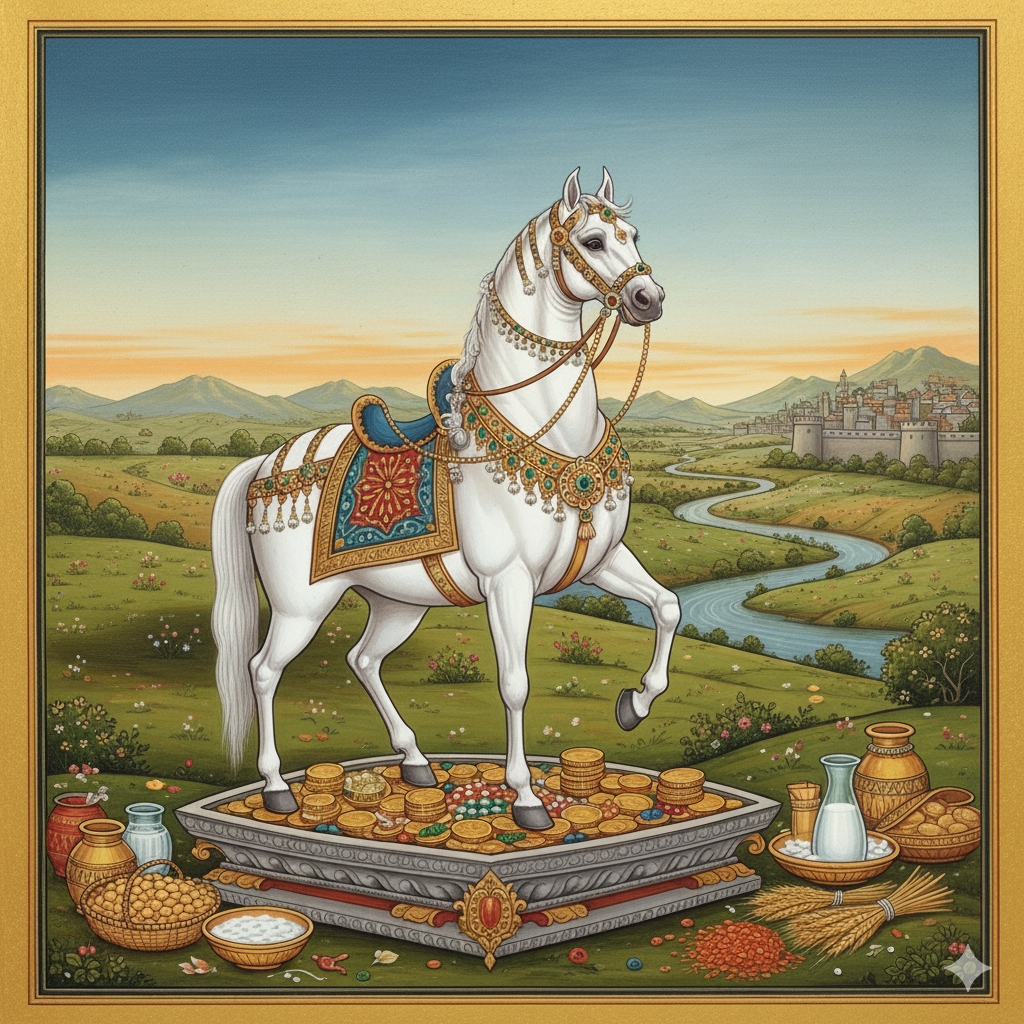
Praise of the Horse
Hymns: 1
This hymn celebrates the horse’s speed and beauty. The animal is compared to powerful forces in nature — wind, lightning, and the sun — showing how much respect and admiration the Vedic people had for it.

Eagle
Hymns: 1
The eagle here is a heroic bird that brings the sacred drink, Soma, from heaven to earth. It stands for courage, intelligence, and the link between humans and the divine world.

Frogs
Hymns: 1
This unusual hymn compares the croaking of frogs after rain to priests chanting sacred verses. It’s a joyful image showing how nature, too, joins in the rhythm of renewal and life.

Song of Vrisakapi
Hymns: 1
Vrisakapi is a divine monkey who serves and amuses Indra. This hymn mixes humor with devotion, showing the playful side of Vedic mythology and the close bond between gods and their companions.

Praise of Indra's Bay Steeds
Hymns: 1
Indra’s horses are described as strong, swift, and full of energy. They pull his chariot through the sky during battles, symbolizing speed, vitality, and the unstoppable force of nature.

Patanga (The Bird)
Hymns: 1
Patanga means “the flying one.” This hymn uses the image of a shining bird to describe the soul or inner light that seeks truth. It reflects how early Vedic thinkers saw life and consciousness as part of a larger cosmic journey.
Sacred and Ritual Objects

Earth
Count: 7
The Earth is praised as the great supporter of life — firm, generous, and enduring. These hymns honor her as a motherly presence who holds and nourishes all beings, sustaining both gods and humans alike.

Heaven
Count: 6
Heaven is described as the vast upper realm that shelters light and order. Together with Earth, it forms the cosmic pair that upholds creation — the union of the above and below, spirit and matter.

Waters
Count: 4
The Waters are living forces of purity, healing, and abundance. These hymns invite them to cleanse, refresh, and bring life to all worlds — showing how deeply the Vedic people revered rivers, rain, and flow itself.
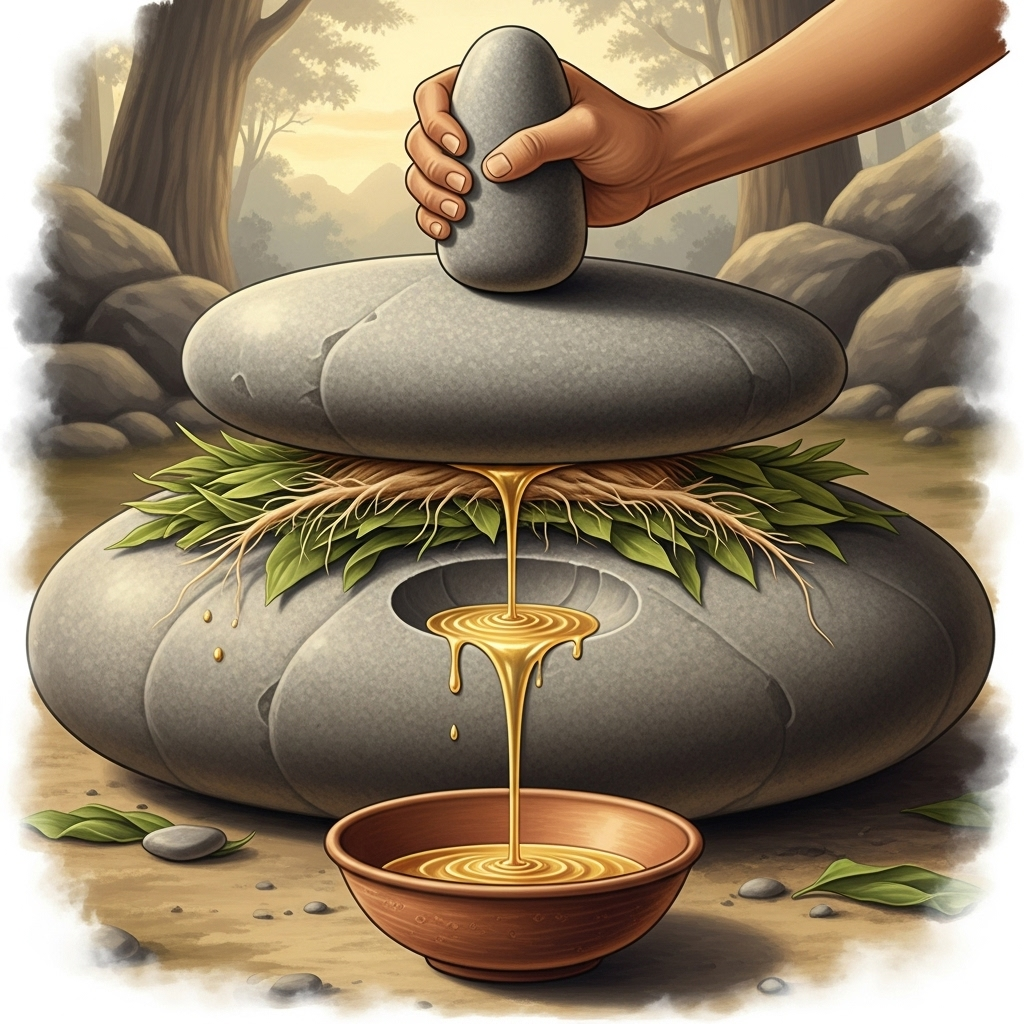
Pressing Stones
Count: 3
The pressing stones, used to extract Soma, are treated almost like living participants in the sacrifice. Their rhythmic striking is compared to song and praise — turning the ritual act into a symbol of harmony and divine cooperation.
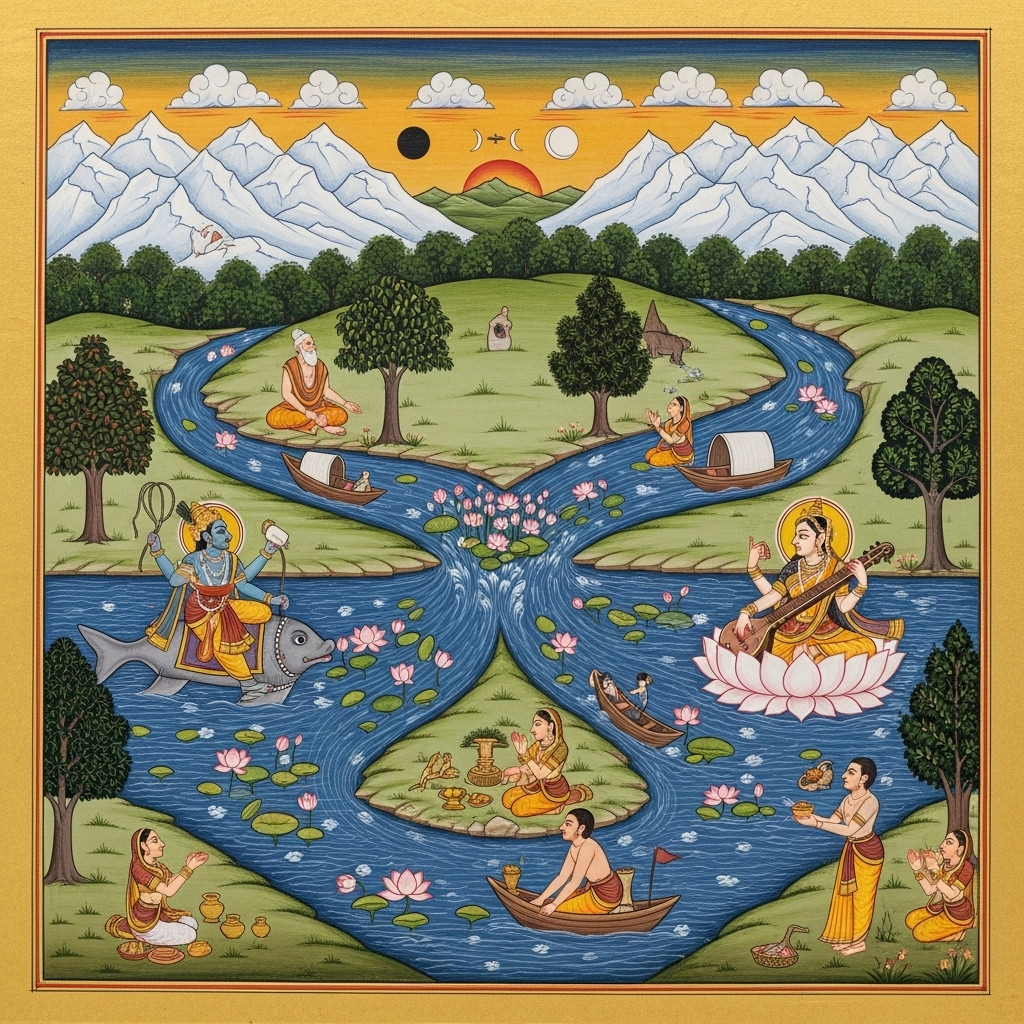
Rivers
Count: 2
Rivers in the Rigveda are more than watercourses — they are goddesses, mothers, and givers of prosperity. These hymns celebrate their strength, beauty, and the life-giving flow that connects lands, people, and gods.
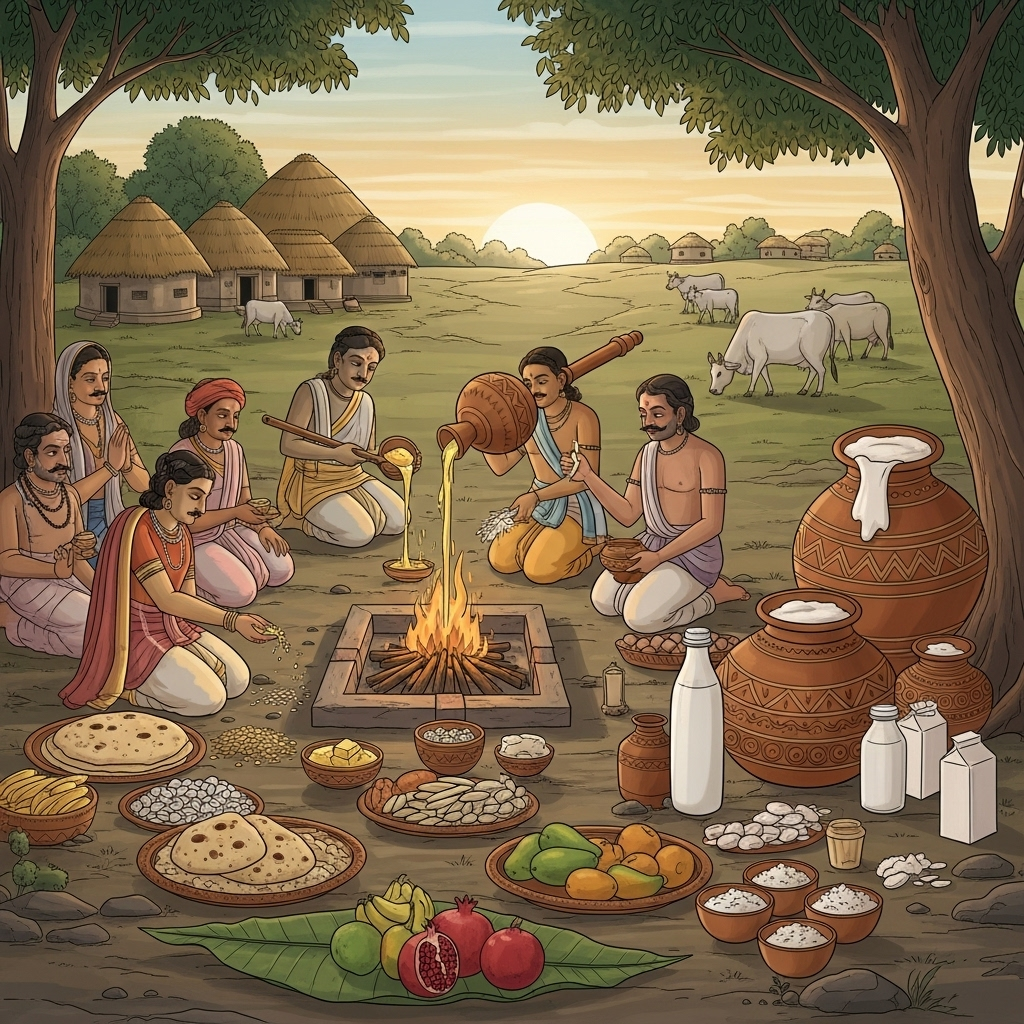
Food and Drink
Count: 1
This hymn honors food and drink as sacred gifts that sustain life. Nourishment is not taken for granted — it is celebrated as divine energy that maintains strength, joy, and balance in the world.

Sacrificial Post
Count: 1
The sacrificial post, or Yūpa, is the central pillar of Vedic ritual. It stands as a bridge between earth and heaven, holding the offering that links humans to the gods. Even this wooden post is given reverence for its sacred role.
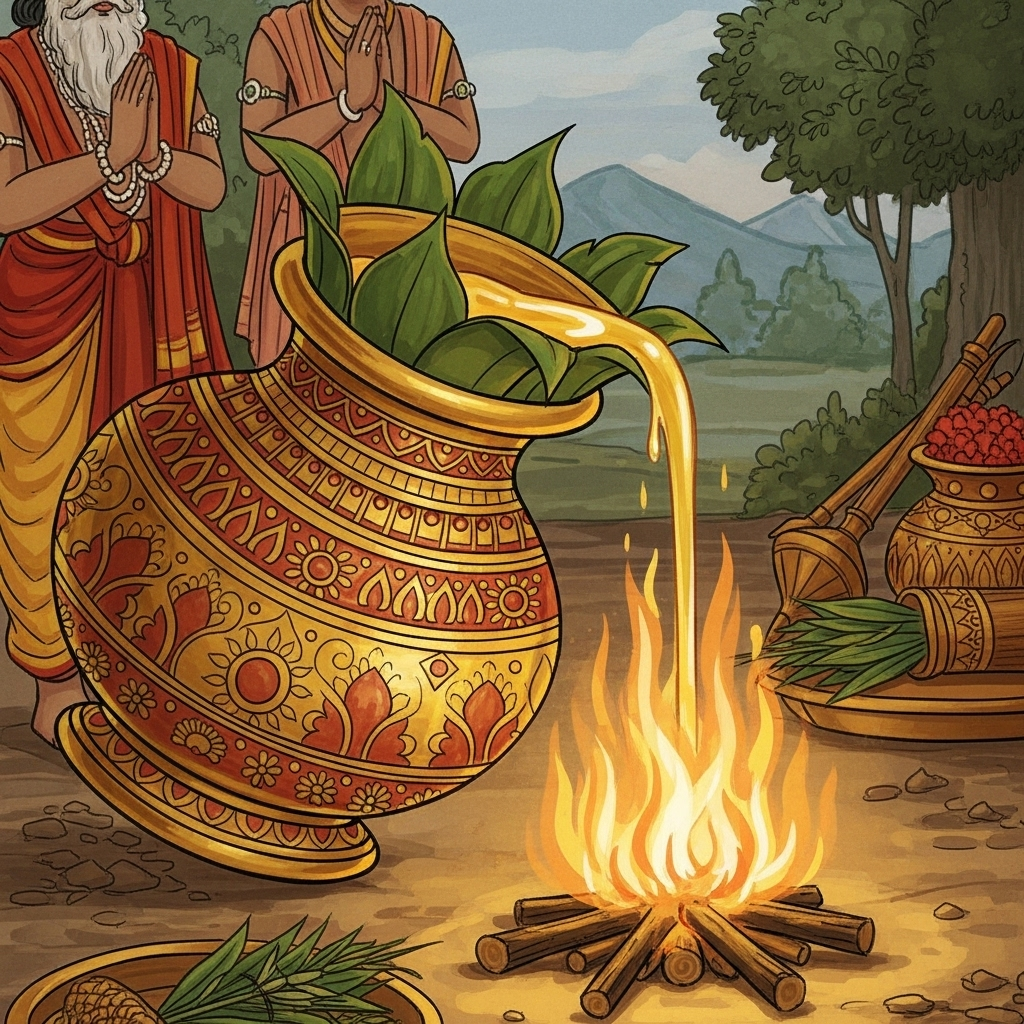
Ghrita (Ghee)
Count: 1
Ghee — clarified butter — is described as golden and radiant, a substance of both earth and fire. It flows in rituals as an offering to the gods, symbolizing purity, nourishment, and the sweetness of divine favor.
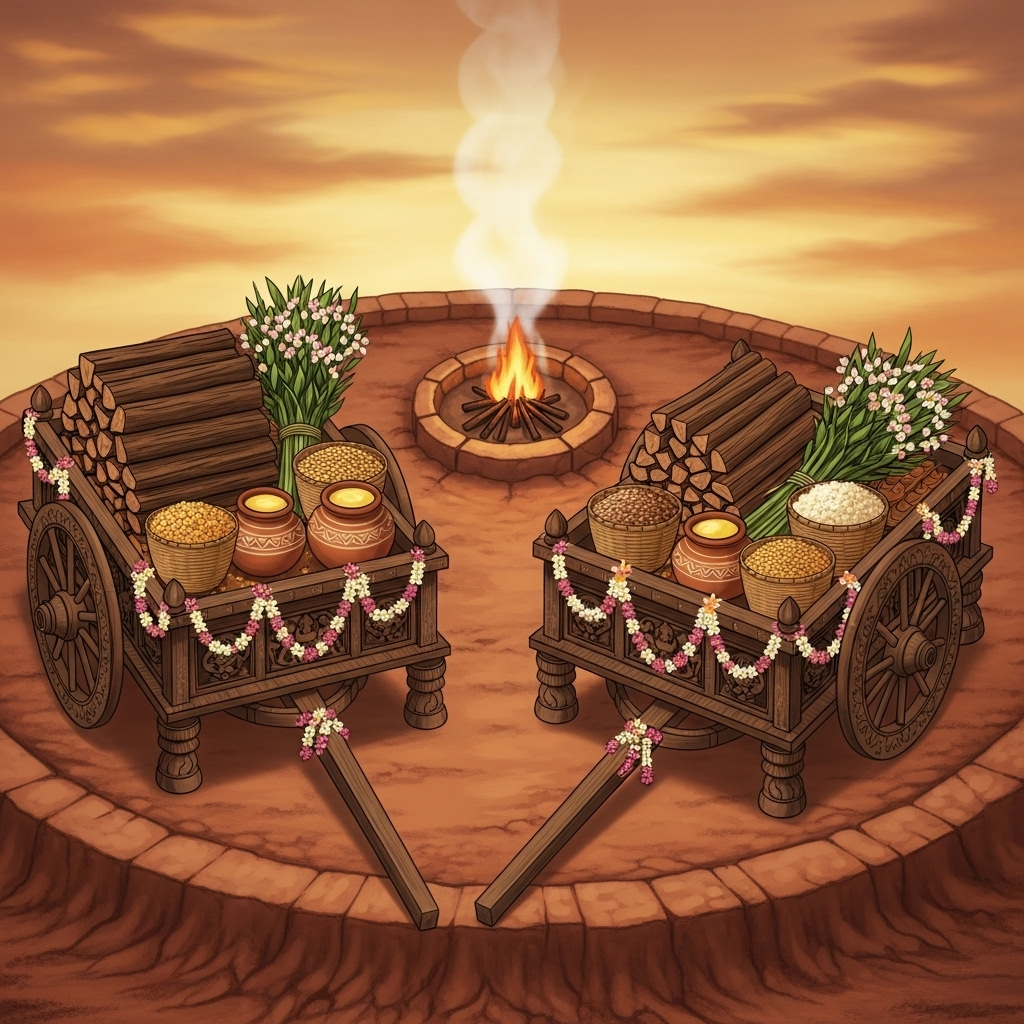
Two Sacrificial Carts
Count: 1
These carts are vehicles of the gods and the departed, carrying offerings between worlds. The hymn reflects on movement and passage — the journey from life to afterlife, guided by sacred order and ceremony.

Fire of Cremation
Count: 1
Here Fire is not just a destroyer but a guide for the dead. The cremation fire (Agni) purifies the body and leads the soul toward the ancestral realm, transforming death into a sacred transition.

Dead One
Count: 1
This hymn speaks to the departed soul — comforting it, guiding it toward peace, and assuring reunion with ancestors. It shows the early Vedic view of death not as an end, but as a passage into another form of existence.
Humans in Rigveda
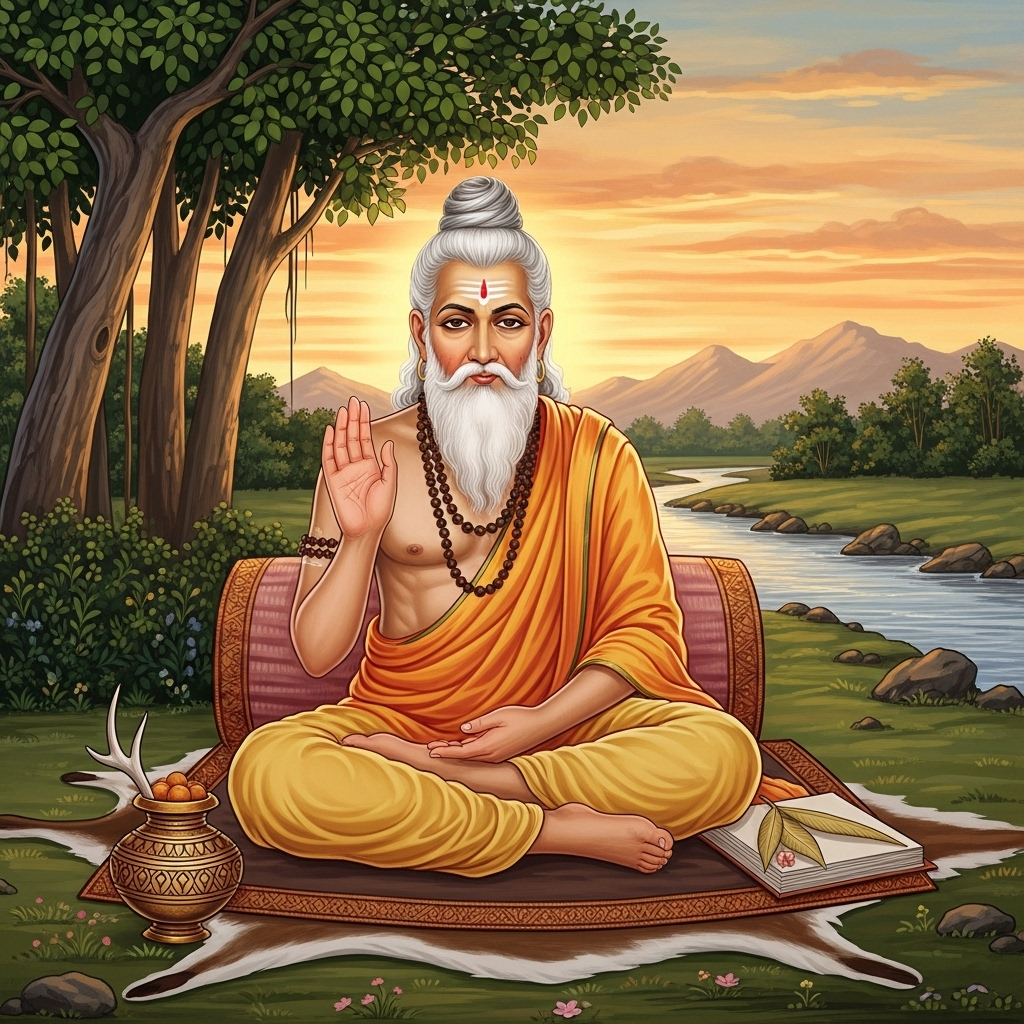
Agastya
Count: 2
Agastya is one of the great Vedic sages — known for his wisdom, discipline, and ability to balance spiritual and worldly life. His hymns often blend deep insight with practical sense, reflecting harmony between thought and action.

Lopamudra
Count: 1
Lopamudra, the wife of Agastya, is one of the few women whose voice appears in the Rigveda. Her hymn expresses the dialogue between love and restraint, showing the human side of spiritual life — emotion, longing, and balance.

Visvamitra
Count: 1
Visvamitra, once a king turned sage, represents the power of transformation through inner strength. His hymns show mastery of both worldly and spiritual realms, including the famous praise of the river Sarasvati.

Vamadeva
Count: 1
Vamadeva is a poet-seer of sharp perception and mystic depth. His hymns often reflect profound understanding of divine birth, creation, and the secret workings of the gods — full of subtle symbolism and insight.

Atri
Count: 1
Atri is one of the seven great seers (Saptarishis). His hymns praise Agni and other deities, focusing on divine light, truth, and inspiration. The Atris were known for their devotion and their link to dawn and renewal.
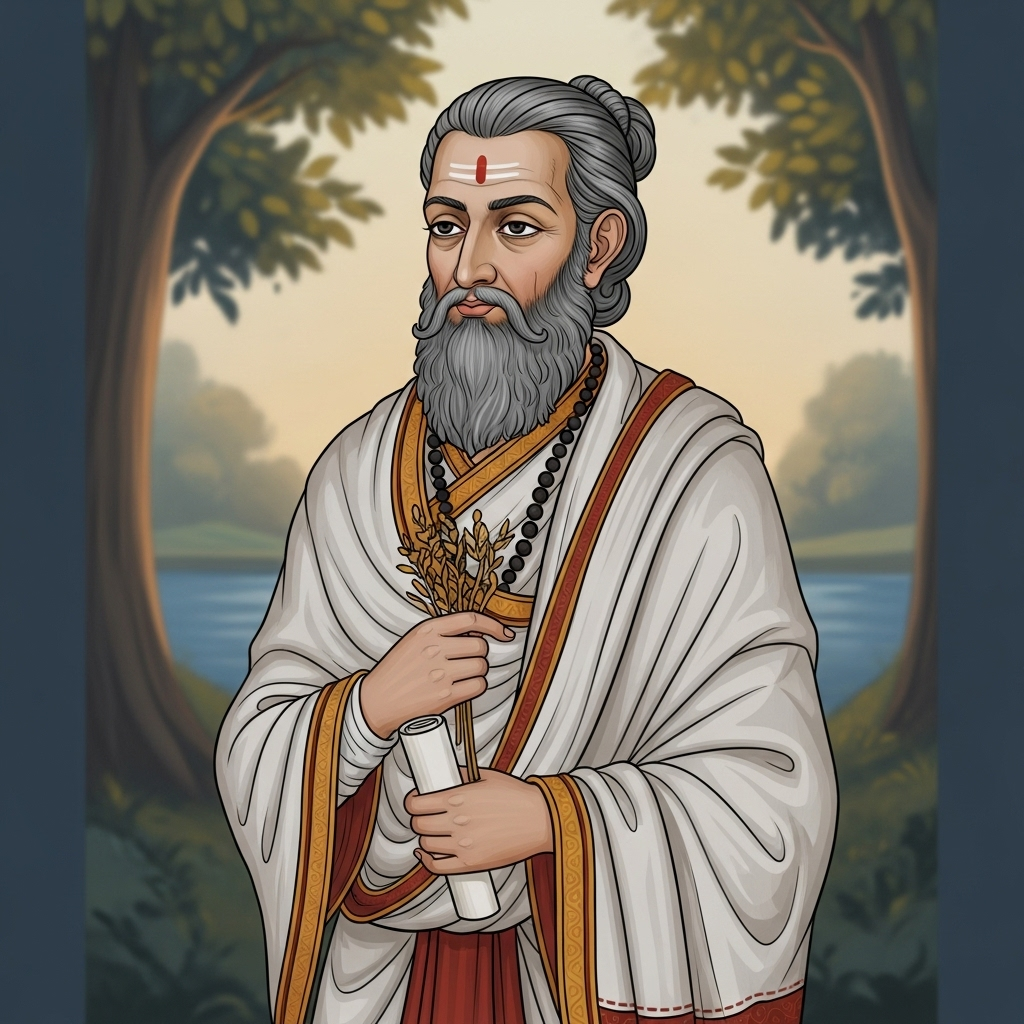
Syavasva
Count: 1
Syavasva’s hymn reflects devotion and gratitude toward the gods who grant favor and protection. His verses show the human side of faith — the seeker appealing to divine power for strength, prosperity, and clarity.
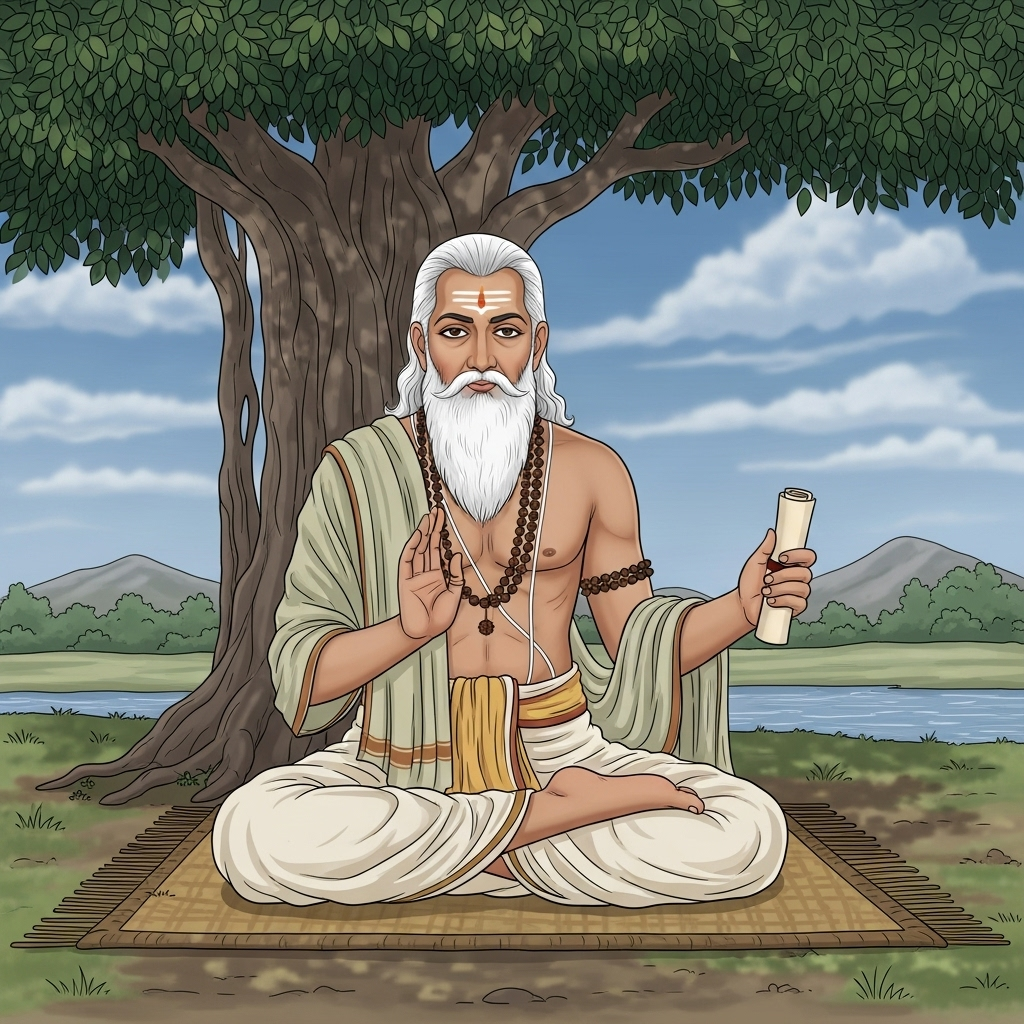
Vasistha
Count: 1
Vasistha, a central Vedic sage, stands for order, truth, and divine wisdom. His hymns emphasize harmony between humans and gods, and his legacy continues in later Indian philosophy as a teacher of spiritual balance.
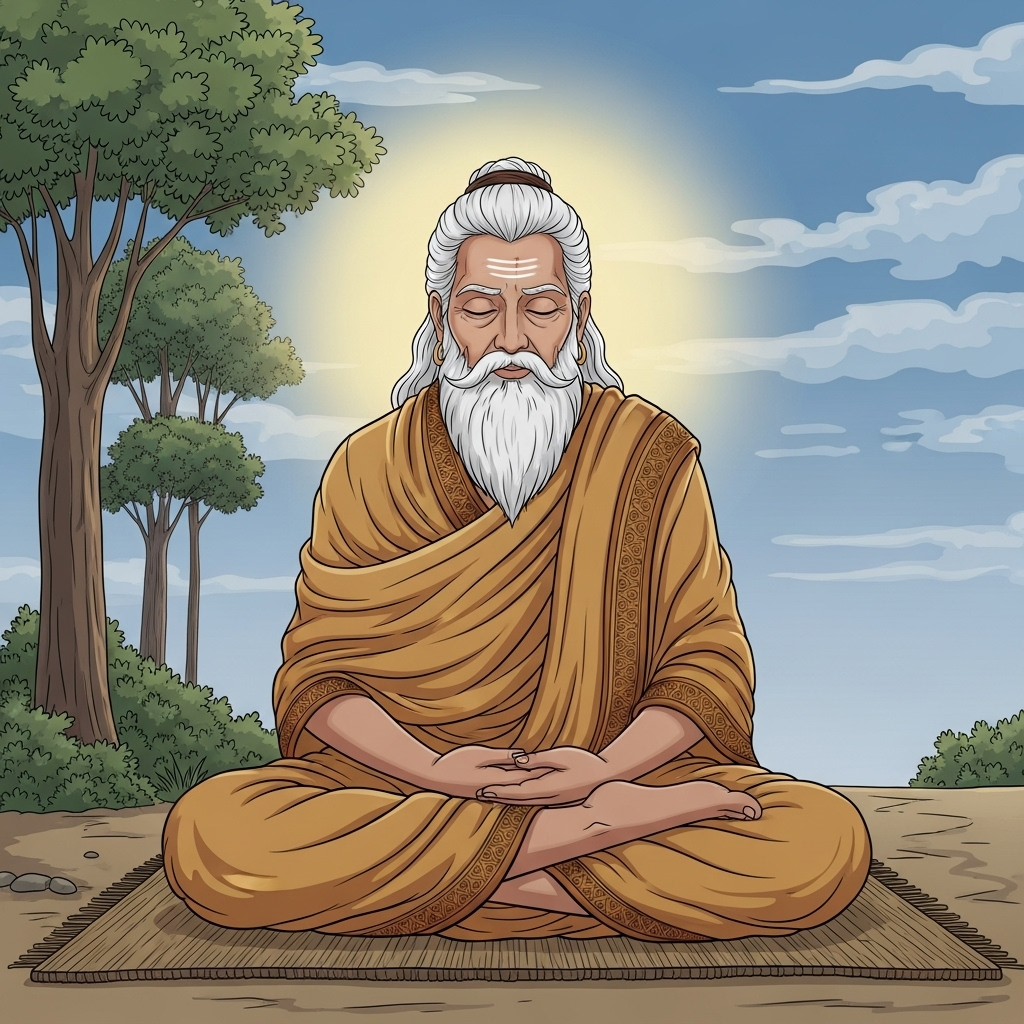
Angiras
Count: 1
Angiras is remembered as one of the most ancient seers — a discoverer of sacred knowledge. His hymns speak of the dawn of inspiration, the awakening of fire, and the uncovering of truth through devotion and discovery.
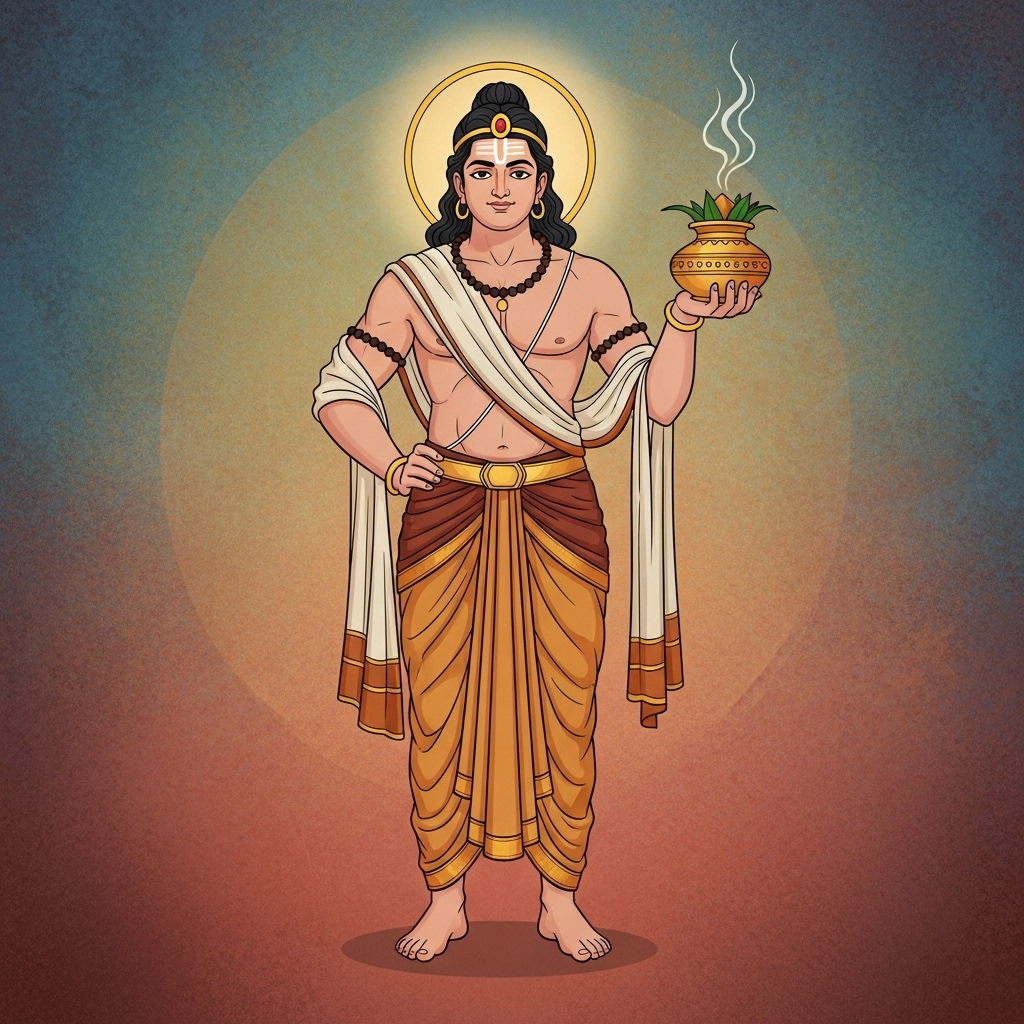
Pururavas
Count: 1
Pururavas’s hymn tells the story of his love for the celestial nymph Urvashi — a poetic expression of longing between human and divine. It captures the beauty and pain of love, transience, and the yearning for the eternal.
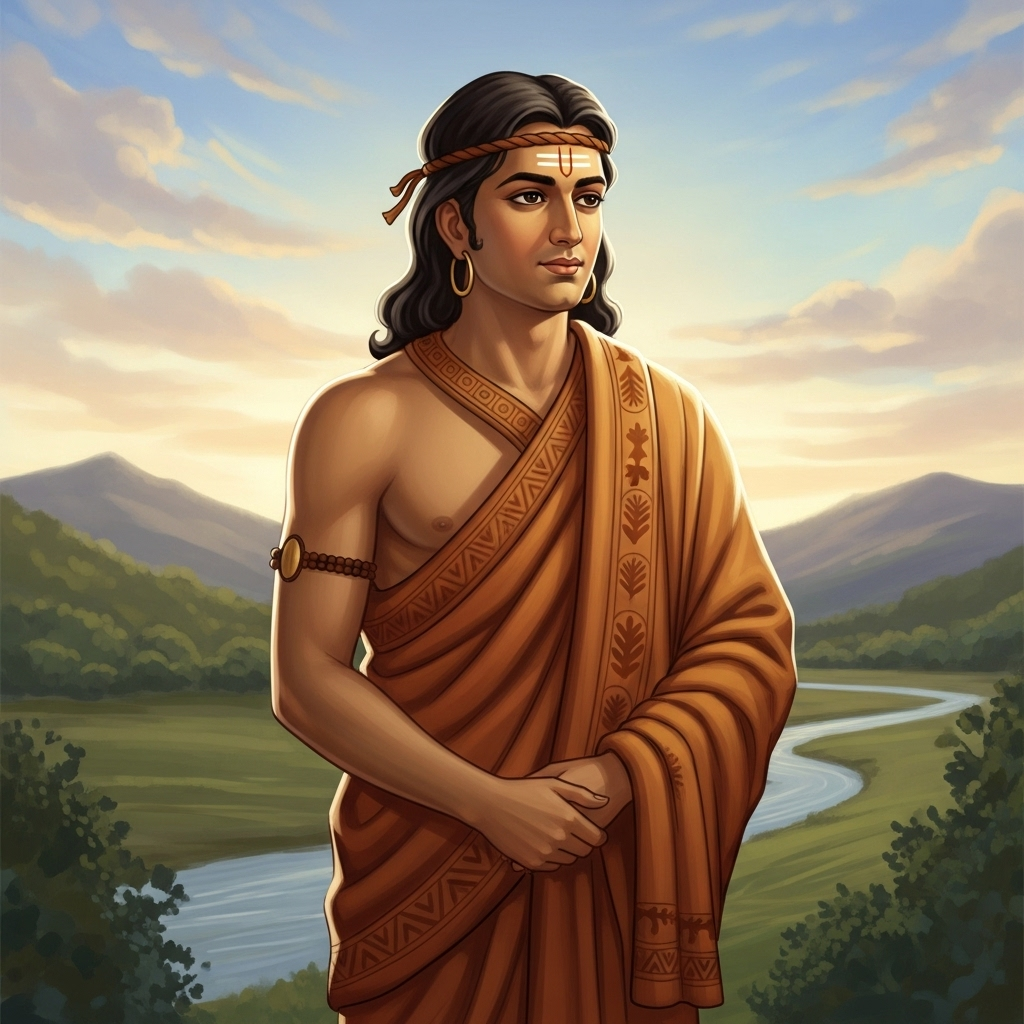
Devapi's Prayer for Rain
Count: 1
Devapi’s hymn is a plea for rain and renewal. It reflects the power of prayer to restore harmony between nature and people, showing the priestly role as one who calls forth balance from the heavens.
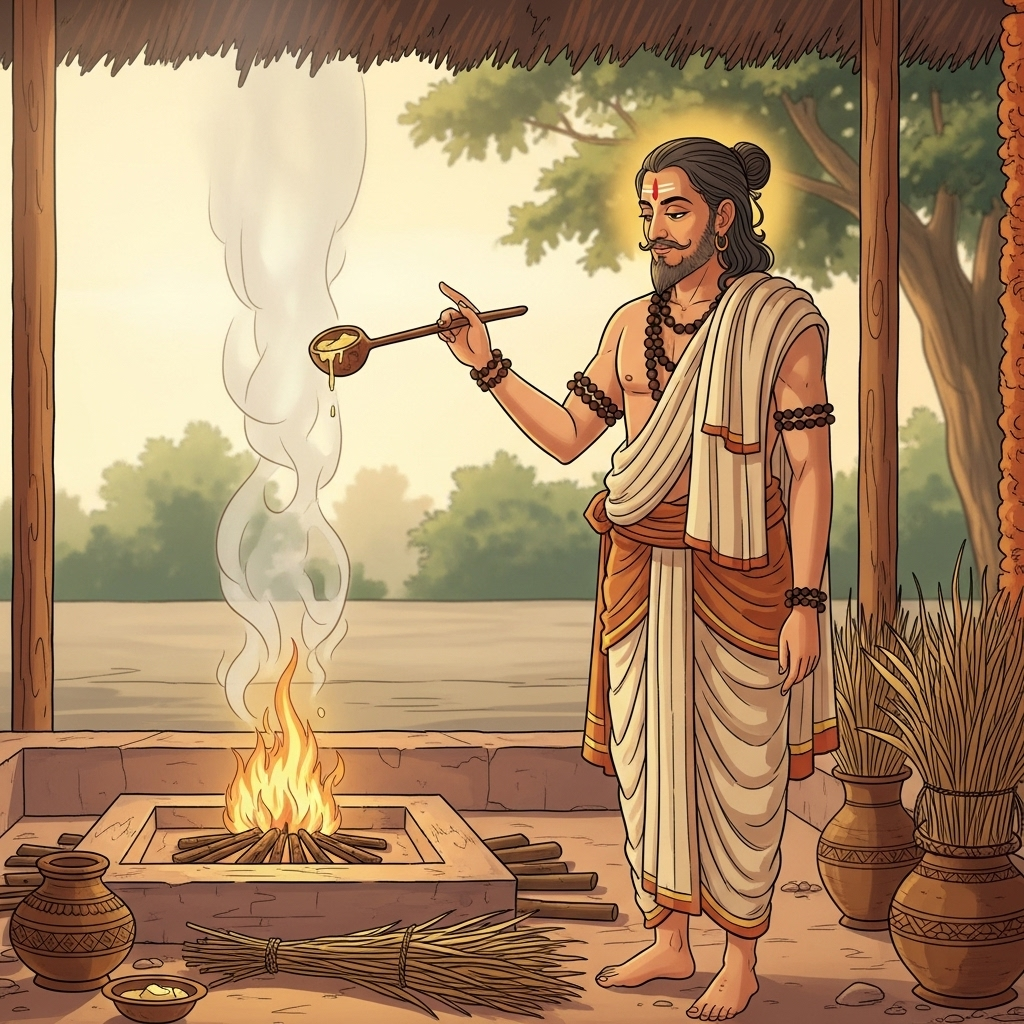
Sacrificial Priest
Count: 1
This hymn honors the human priest as a link between gods and men. Through precise ritual and chant, he turns sacred knowledge into action — a reminder of how discipline and devotion sustain divine order.
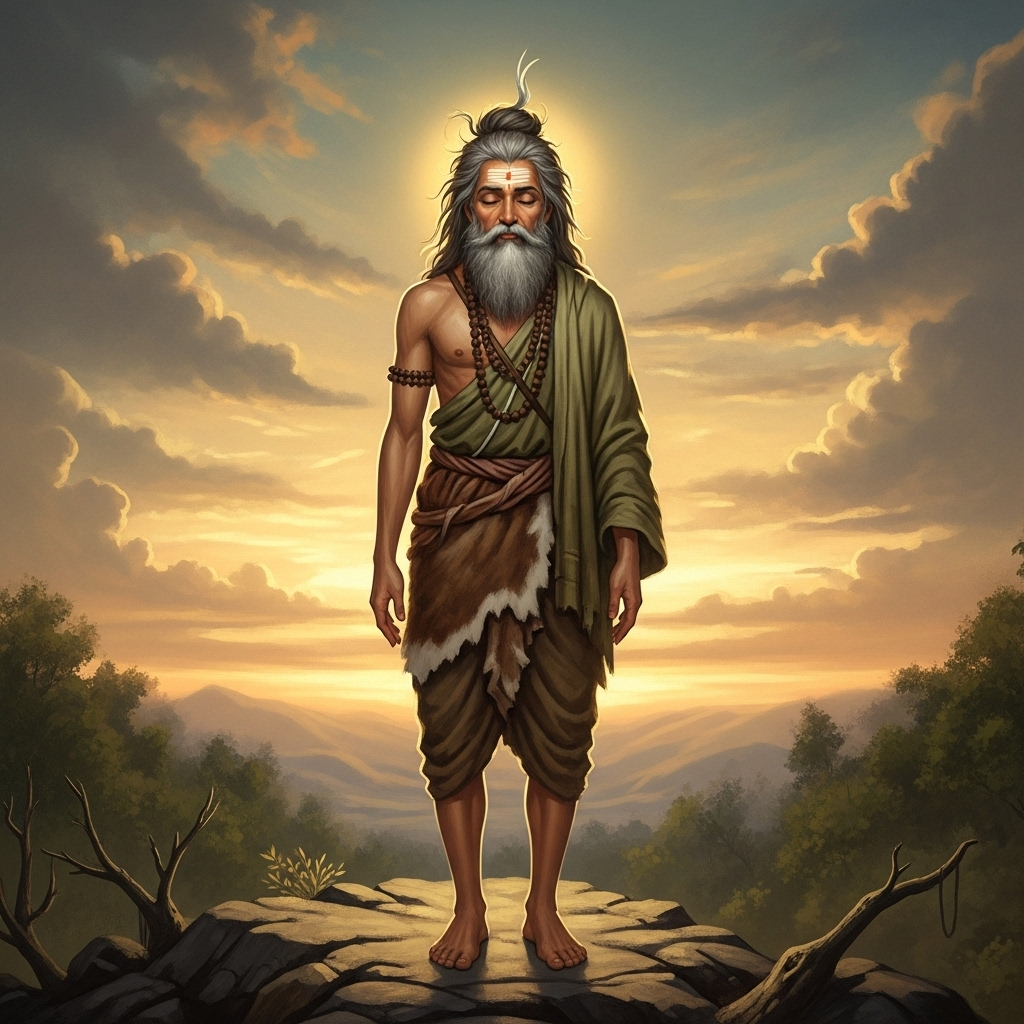
Muni
Count: 1
The Muni, or inspired ascetic, moves beyond ordinary life — wild, free, and united with the wind and gods. This hymn celebrates ecstatic spirituality, where the seeker becomes one with the forces of nature and spirit.